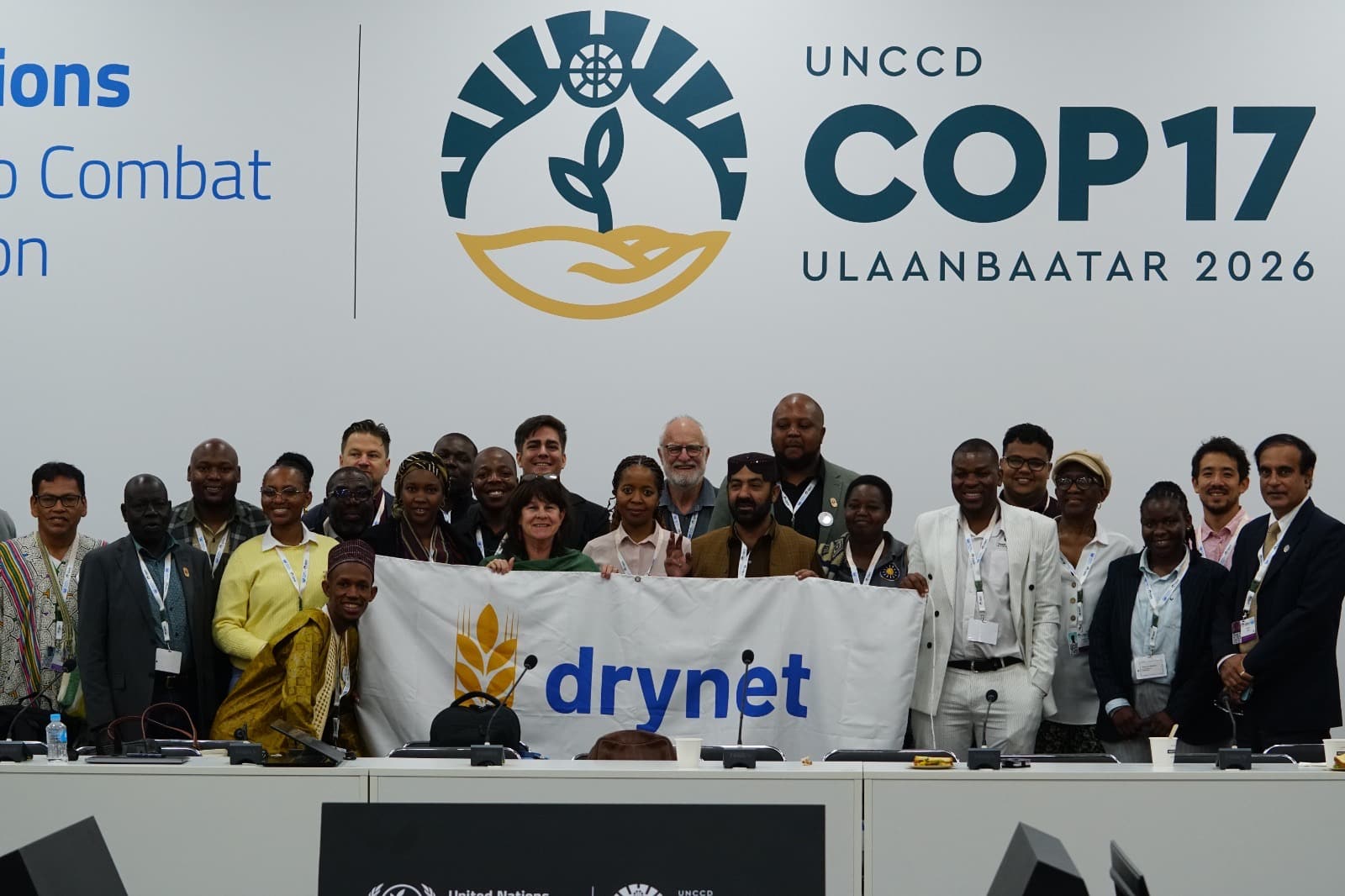
The GEF Assembly takes place every four years, and in early June 2026 the Assembly met in Samarkand, Uzbekistan. Drynet was able to contribute to and participate in the Assembly and to gain insights into the direction that the GEF will be taking with its next replenishment of funds, known as GEF 9. The Assembly also marked the political launch of the GEF-9 cycle, setting strategic priorities that will guide global environmental financing over the coming cycle.
The Assembly was attended by more than 2,000 delegates and partners, and formalised the $3.9 billion GEF-9 replenishment. While this replenishment secures the continuation of GEF operations, it represents a decrease compared to previous replenishment cycles, highlighting the continuing gap between available finance and the scale of action required to address the biodiversity, climate, land degradation and pollution crises before 2030.
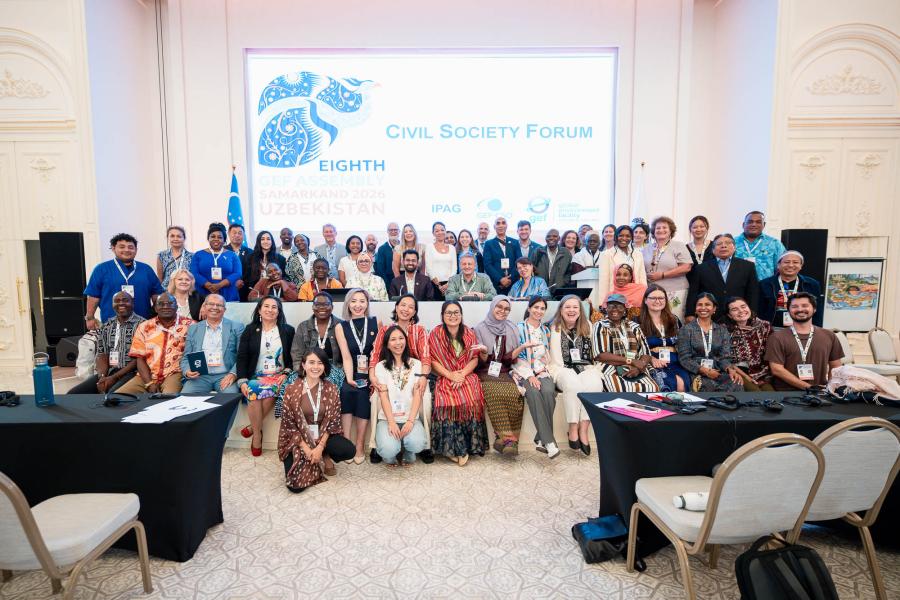
It was a week of sharing ideas and generating impetus to achieve global environmental goals. Drynet was represented by Ana Di Pangracio of FARN and Noel Oettle, Drynet Coordinator. Also participating was Drynet mentee Mandukhai Tsogtbal from Mongolia. We met with numerous colleagues and friends from the global community and contributed to side events and workshops on priorities for the next four years, including the “whole-of-society” approach that is promoted by the GEF.
The Whole-of-Society Approach
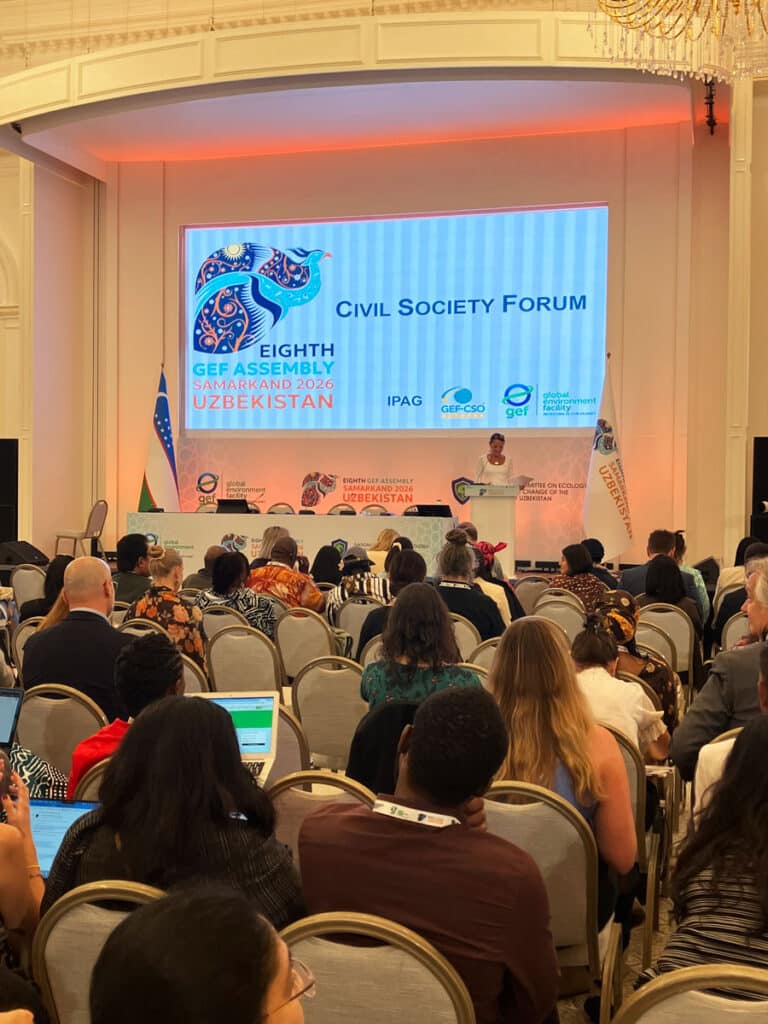
Noel Oettle presented a talk at a session organised by the GEF entitled “Designing for Delivery: Whole-of-Society Approach under GEF-9”. His input was titled “Insights into a CSO-led GEF MSP: Strengthening Civil Society Role in Achieving Land Degradation Neutrality”, which demonstrated how Drynet and the CS4LDN Project are making the whole-of-society approach a reality.
Beyond the replenishment itself, discussions throughout the Assembly placed strong emphasis on improving policy coherence and implementation across the three Rio Conventions (CBD, UNFCCC and UNCCD). Many sessions highlighted that integrated planning, financing and governance are essential to maximise environmental outcomes and make more effective use of increasingly constrained financial resources.
A resonating message from the Assembly was that investments that protect and restore nature are vital to increase the resilience of ecosystems and sustain and grow more resilient economies. GEF Interim CEO Claude Gascon concluded the Eighth GEF Assembly, saying “a healthy planet makes lasting development possible”, and pleaded for all to act together with urgency and purpose.
Strategic Priorities of GEF-9
The strategic priorities of GEF-9 include:
- Integrated Programmes targeting systemic transformations across nature, food, urban, energy, and health systems to integrate the value of nature in production and consumption systems.
- Blended finance with an aspirational target of programming 25% of resources to mobilise private capital;
- Support for vulnerable countries, with the goal of directing 35% of resources to support Least Developed Countries (LDCs) and Small Island Developing States (SIDS);
- Support for Indigenous Peoples and local communities (IPLCs), $100 million for the Inclusive Conservation Initiative and at least 20% to the Global Biodiversity Framework Fund and each of the GEF family funds for a commitment widely welcomed by civil society as an important step towards more inclusive environmental finance;
- Whole-of-government and whole-of-society approaches, deepening participation of civil society, youth, women, and the private sector.
Recognition of Civil Society Organisations
The emphasis on the whole-of-government and whole-of-society approaches reflects the pivotal role envisaged for civil society organisations (CSOs), IPLCs, women, youth, and other stakeholders in both the design and implementation of initiatives advancing global environmental goals. CSOs are increasingly recognised by the GEF as playing a key role not only in delivering environmental outcomes on the ground, but also strengthening accountability, bridging the gap between policy and vulnerable communities, and ensuring GEF investments reach communities most affected by environmental degradation and climate risks.
Throughout the Assembly, discussions also stressed that achieving these objectives will require more accessible financing mechanisms, stronger participation throughout the project cycle, and effective monitoring to ensure resources reach the communities they are intended to benefit.
For Drynet, the Assembly confirmed that civil society networks are increasingly recognised beyond their role as project implementers, but also as strategic partners in strengthening environmental governance, promoting inclusive financing and supporting the implementation of integrated land, biodiversity and climate solutions. These priorities strongly align with Drynet’s ongoing work through the CS4LDN project and its commitment to advancing meaningful participation in global environmental governance.