Catalyst for Change
Drynet is a global network of 26 civil society organisations driving collective action for a sustainable future in drylands. We co-create solutions, connect communities, influence policies, and amplify local voices to tackle the urgent challenges of land degradation, drought, and climate change.

Rooted in Local Realities
Drylands are home to some of the world’s most marginalised rural communities – yet they hold a wealth of knowledge and innovation. From the Andes to the Mauritanian desert, from Central Asia to South Africa, Drynet members work directly with these communities to develop practical, cost-effective, and sustainable land-use solutions that are too often overlooked by decision-makers and donors.

Bridging Local and Global
We strengthen the voices of dryland communities by linking their experiences to national, regional, and international decision-making arenas. Through peer learning, advocacy, and knowledge exchange, Drynet ensures that local initiatives influence global platforms such as the UNCCD and add valuable pointers to attaining the SDGs.

As the vital connections between land use, climate change, biodiversity loss, food security, and poverty become more clear, the urgency for inclusive, locally driven solutions has never been greater. Drynet’s mission is clear: to champion sustainable land use and resilient livelihoods, powered by the people who know their lands best.

Drynet members share and exchange knowledge and experiences, develop joint positions, and actively participate in local, national and global development and planning processes. At the heart of this work is a commitment that the voices of those most affected by land degradation are heard and valued in global forums.

___________________________________

Drynet supports civil society organisations (CSOs) and networks with the knowledge, tools, and visibility they need to influence dryland development policies effectively in the following ways:

1. Knowledge Sharing & Communication

  • Curate a user-friendly platform for sharing project results and participatory methodologies to combat land degradation among civil society organisations (CSOs), key stakeholders from science and policy-makers;
  • Collect, translate and disseminate inspiring initiatives, stories, news and relevant scientific developments on our website and in a series of newsletters and webinars;‏
  • Document successful grassroots’ responses to dryland problems and the impact their work has had on local communities, publicising these and encouraging their up-scaling.

2. Capacity Strengthening

  • Increase CSOs capacity to link different cooperation frameworks and use the relevant planning instruments in their design of bankable projects;
  • Convene capacity building trainings for project partners and target groups on lobby and advocacy, fundraising, project development, communication and networking.

3. Advocacy & Policy Engagement

  • Increase the visibility of grassroots initiatives to ensure policymakers are informed about the positive impact they have on dryland communities;
  • Review and design strategies with national CSOs to enhance their participation in the development and implementation of relevant policies, to be able to jointly draw more attention to dryland issues;
  • Jointly develop positions on issues related to drylands and desertification and sharing them through position papers and side events at relevant seminars and conferences.
  • Establish avenues for greater participation of CSOs and civil society in policymaking and decision-making.

4. Network Building & Partnerships

  • Build strong CSO partnerships, both between organisations in the participating countries and within the network as a whole;
  • Build linkages and dialogues between CSOs, the policy community (at national and international levels) and other stakeholders.

Drynet was founded in 2007 when fourteen civil society organisations from around the world joined forces at COP6 with a shared goal: to give local communities a voice in the fight against land degradation and combat dryland degradation through collective action. Its initial mission was to strengthen civil society organizations to play a crucial role in the sustainable management of drylands and to ensure their needs reach policymakers.

Since then, Drynet has grown into a recognised global network advocating for the interests of dryland communities. With a strong presence in global forums such as the United Nations Convention to Combat Desertification (UNCCD), it has successfully transformed community voices into action and policies at the international level.

Drynet is a self-funded, membership-based network. It is governed by a constitution and its members share a set of common values. Members contribute annual fees to support the coordination of network activities.

The highest authority of the network is the General Assembly, composed of all members. The Assembly is responsible for electing the Board and appointing the Network Coordinator.

The Drynet Board meets monthly to guide the network’s activities. Its members serve two-year terms, with the possibility of re-election.

The Drynet Secretariat is hosted by one of the member organisations and manages the day-to-day administrative work under the direction of the Board.

Throughout its history, Drynet’s coordination has rotated among different member organisations and is currently hosted by Indigo development & change in South Africa.

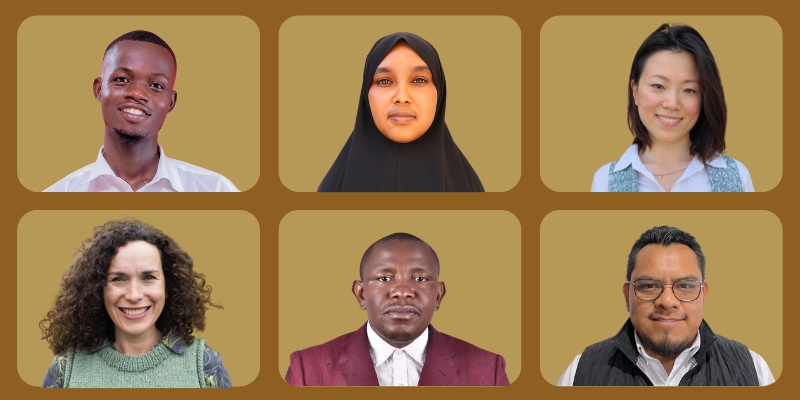
Board Members for 2025 – 2027

Fatima Kaba - Cochair 

ENDA, Senegal
fatima.kaba@endaenergie.org

Marioldy Sanchez Santivanez- Cochair 

AIDER, Peru
msanchez@aider.com.pe?

Valeria Enderle

CAUCE, Argentina cauceecologico@gmail.com

Harrison Nnoko Ngaaje

AJESH, Cameroon
h.nnoko@ajesh.org

Amiya Prapan
Chakra Borty

DYDF, Bangladesh
dydfbd@gmail.com

Alissa Jeridi

CARI, France desertification@cariassociation.org

Latest News and Events

Topic

17 key messages emerged after a consultative participatory online process with more than 150 CSO representatives ahead of CRIC23.  These messages unite civil society, youth, indigenous peoples and local communities’

Topic

The UNCCD Secretariat has announced the selection of Ana di Pangracio (FARN, Argentina) as the alternate CSO observer at the UNCCD Science – Policy Interface (SPI) until COP17. Drynet extends

Stay connected and sign up to our newsletter

Intuit Mailchimp

The primary mission of Drynet is to champion sustainable land use and resilient livelihoods by connecting local drylands communities with global policy platforms, such as the UNCCD, to fight land degradation and desertification.

Drynet was founded in 2007 when fourteen civil society organisations joined forces at COP6 with the shared goal of giving local dryland communities a stronger voice in the fight against land degradation.

Drynet’s main activities include Knowledge Sharing & Communication, Capacity Strengthening for CSOs, Advocacy & Policy Engagement (especially with the UNCCD), and Network Building & Partnerships.

Drynet is a self-funded, membership-based network governed by a General Assembly. The Assembly elects a Board that guides the network, with day-to-day administration managed by a rotating Secretariat hosted by a member organisation.

Generic selectors
Exact matches only
Search in title
Search in content
Post Type Selectors
post
page
member
Filter by Categories