


According to the United Nations Convention to Combat Desertification (UNCCD), drylands are defined as arid, semi-arid, and dry sub-humid areas where the amount of precipitation is less than the potential evapotranspiration, meaning water loss through evaporation and transpiration is greater than the water received through rainfall.
Drylands are characterised by low and irregular rainfall and frequent droughts. Examples of drylands are deserts, grasslands and savannahs, and woodlands.
Drylands cover 41% of the Earth’s land and are home to three billion people. Despite their water scarcity, drylands are crucial for global food security and livelihoods. Approximately 44% of the world’s agriculture systems are located in drylands, and dryland rangelands provide grazing for 50% of the world’s livestock. Farming and livestock production account for 30–50% of GDP in many dryland countries and provide livelihoods for 70–80% of the population.
Most dryland communities depend heavily on natural resources for their livelihoods. Healthy ecosystems are therefore critical for these populations. However, land degradation is widespread in drylands, leading to food insecurity and undermining the livelihoods of the people that reside in the drylands. This degradation is linked to unsustainable land use and production practices, including woodlands clearing, monocultural farming, pesticide overuse, and overgrazing.
Countering dryland degradation by protecting and restoring soils and biodiversity considerably contributes to poverty alleviation and hunger eradication world-wide. Over many years, people have developed unique strategies to cope with water scarcity and climate variability. These strategies, rooted in indigenous knowledge, include water harvesting techniques, climate forecasting, cultivation and climate resilience practices.
Policymakers often overlook the value of this rich local knowledge, rather following top-down and technicist approaches to address the problems of degradation. Yet drylands are home to some of the world’s most vulnerable ecosystems and their people offer valuable lessons for the global fight against poverty, climate change, and desertification.
Certain groups within the drylands population such as women, people with disabilities, Indigenous People, and herders are disproportionately affected by land degradation. Including these groups and considering their roles is essential in finding solutions to more sustainable land use management and building more just and resilient communities.

The degradation of drylands is often referred to as “desertification”. According to the United Nations Convention to Combat Desertification (UNCCD), desertification is defined as a gradual process of soil productivity loss and the thinning out of the vegetative cover because of human activities and climatic variations such as prolonged droughts and floods.
Through changes in the physical and chemical composition of soil, the loss of natural vegetation and erosion by wind and water, land loses fertility and desert-like areas appear. These desert-like areas are very different from natural deserts, which are ecosystems with unique features. Desertification is characterised by loss of biological (soil, plants, animals) and cultural (lifestyles, languages, knowledge) diversity.
Scale of Desertification
Desertification affects every continent, with all land vulnerable to degradation. About 41% of the total land surface of the world is dryland. Currently an estimated 70% of the world’s drylands are affected by degradation. The most at risk area in the world is the Sahel, where 50% of the population is directly affected by land degradation.

The most well-known causes of desertification are overgrazing, unwise ploughing, logging and bushfires, all of which are exacerbated by population pressures. The integration of dryland economies into the world market is coupled with agricultural development programmes in which monocultures of cash crops are stimulated. These monocultures are typically very vulnerable to disease and plagues and require a lot of fertilisers and pesticides. The best land tends to be used for these cash crops, leaving more marginal land for subsistence farming and pasture. The reduction of the quality and availability of land for vulnerable populations adds to pressure on remaining resources. As land and water become more scarce, conflicts within and between communities continue to increase.
For farming communities, land degradation means lower productivity or even harvest failure. The biomass and quality of pasture decreases, with less food for cattle and less income and food for people. Land degradation also undermines social structures. The division of labour between men and women changes and, in general, the working load for women increases. Distances that must be covered to gather fuel and water become greater, at the expense of other activities, for example the cooking of food. Loss of vegetation leads to water and wind erosion and air pollution. Quality of water diminishes through pollution and sedimentation.
These are all factors that directly or indirectly threaten health. Not only locally, but also at the global level, the effects of land degradation are enormous. Productive capacity is decreasing at a rate of 10 billion hectares a year, and at the same time the world population is growing at a rate of 1.67% a year. This severely threatens world food security.
The loss of biodiversity in drylands is extremely severe. Most of the staple foods like wheat, barley, millet, pulses, and cotton stem from drylands, as well as many animals used by people like horses, cows, sheep, goats, camels and lamas. As there are not so many species and genes adapted to dry climates, every loss of genetic material in drylands has an enormous potential impact. Drylands hang in a precarious ecological balance, which is partly caused by periods of water scarcity. The disturbance of this balance can severely affect the people who depend on these fragile ecosystems.
(From: Both ENDS Information Pack Nr.1 Desertification)

By desertification mainstreaming we mean the integration of the environmental dimension, especially related to drylands and degradation, into national development priorities, processes and frameworks. Examples are the Millennium Development Guidelines, 5-year National Development Plans, EU Country Strategy Papers and World Bank Poverty Reduction Strategy Papers (PRSPs), and trade related frameworks.
The Global Mechanism and Drynet state the following in their joint publication Civil Society Organisations in Drylands – Practical guide: “As countries develop strategic national development frameworks to prioritise and guide resource allocation and official development assistance, development aid actors are increasingly aligning their programmes to these frameworks. It is essential that dryland and land management issues be addressed at this level to raise the political priority of drylands, whether through the National Adaptation Plans (NAP) or other institutional frameworks. Efforts to achieve this can be called ‘mainstreaming,’ a process that involves dryland issues and needs becoming integrated within all development-related decision-making processes, policies and laws, institutions and planning frameworks.”

At UNCCD COP17 in Ulaanbaatar, Mongolia, Drynet and its partners turned side event rooms into spaces of genuine dialogue, where local knowledge met global policy, and community voices shaped the

The final 19 Key Messages reflect civil society positions, priorities, and recommendations gathered through a series of participatory and inclusive consultation processes coordinated by the UNCCD CSO Panel. The process
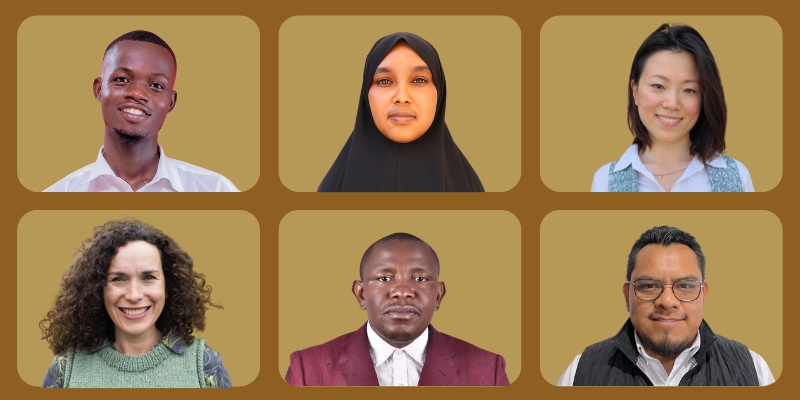
Six of the twelve mentees in the first cohort of the CS4LDN mentorship programme reveal what the mentorship process means to them and what LDN represents in their various local
According to the UNCCD, drylands are defined as arid, semi-arid, and dry sub-humid areas where the amount of precipitation is less than the potential evapotranspiration, indicating high water loss.
Drylands cover 41% of the Earth’s land and are currently home to three billion people.
Drylands are crucial because approximately 44% of the world’s agriculture systems are located there, and dryland rangelands provide grazing for 50% of the world’s livestock.
Dryland communities have developed unique strategies rooted in indigenous knowledge, including water harvesting techniques, climate forecasting, and climate resilience cultivation practices.