A Collective Voice Moving From Participation to Action — Civil Society’s Role at COP17

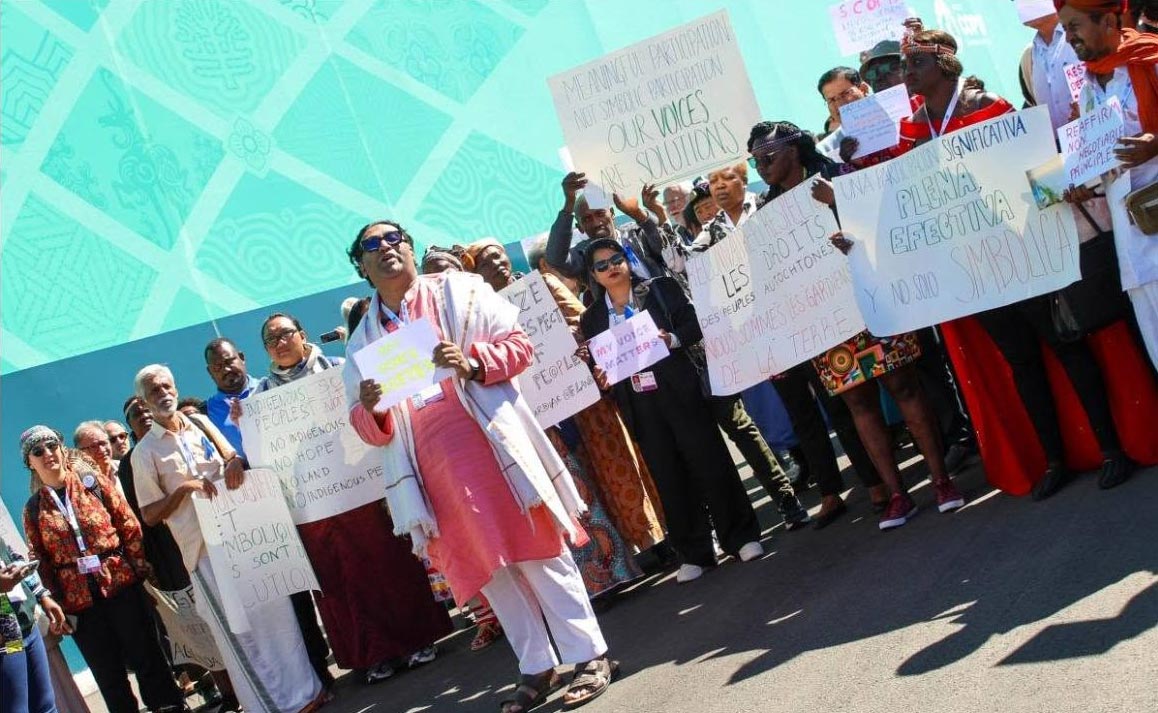
Amiya Prapan Chakra Borty joins the Indigenous Peoples and local communities protest.
By Amiya Prapan Chakra Borty, DYDF, Drynet Board Member and UNCCD CSO Panel Member (Asia)

From my perspective, based on my experience in Bangladesh and across Asia, the discussions at COP17 cannot be separated from the realities of people living with drought, land degradation, water insecurity, declining agricultural productivity and climate-related vulnerability. For these communities, global decisions are meaningful only when they lead to tangible results on the ground, which are achieved by provision of resources, creation of new opportunities, development of stronger local institutions and practical action.

This is why I believe the role of CSOs should go beyond participation. Being present in a negotiation room or at a side event is important, but presence alone is not enough. Meaningful participation creates pathways for community knowledge and local solutions to influence policy and implementation.

I was also encouraged by the growing recognition of young people and Indigenous communities as important actors in addressing land degradation and drought. Young people are not only future leaders; they are already organising communities, developing innovative solutions, restoring ecosystems and advocating for more inclusive policies. Their meaningful engagement should therefore be embedded in implementation, and not limited to consultation.

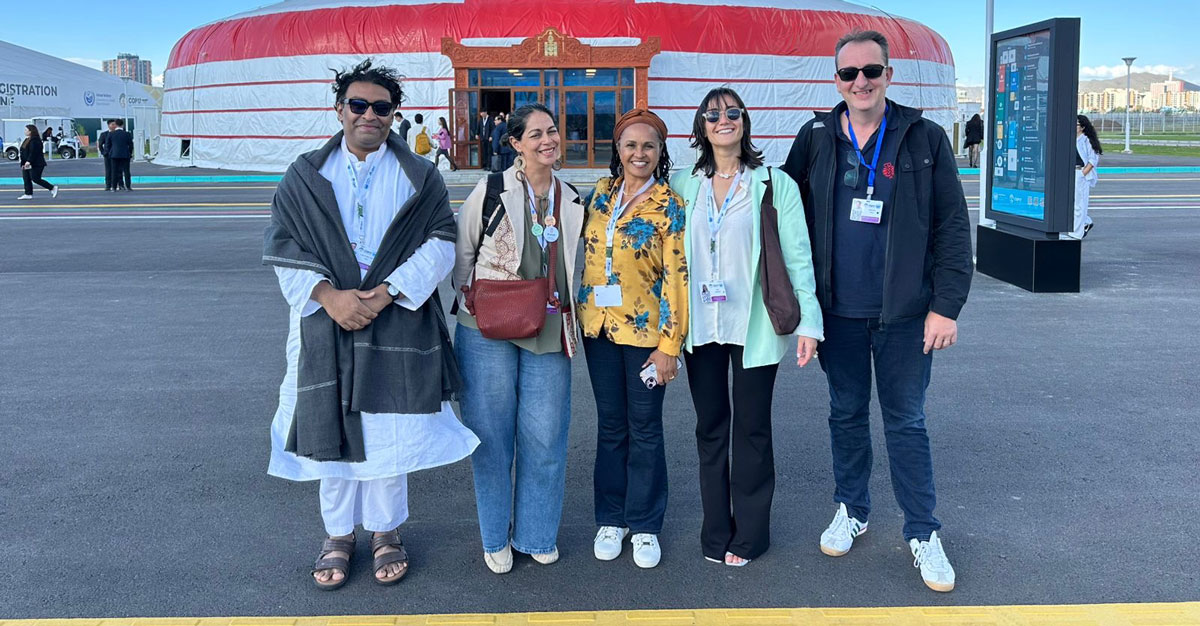
UNCCD CSO Panel members in discussion. Photo by IISD/ENB | Anastasia Rodopoulou.

COP17 reminded me that civil society has a responsibility not only to speak, but also to connect global commitments with local action. We must continue to strengthen the bridge between communities, national processes and international policy spaces. As I return to Bangladesh after COP17, I take with me many lessons, relationships and responsibilities. I am particularly grateful to my fellow CSO Panel members, Drynet and the wider civil society community for the solidarity and collective spirit we shared throughout this journey.

For me, the real work begins after COP. The challenge is to take the commitments, discussions and lessons from Ulaanbaatar back to our communities and networks – and turn them into action. COP17 was therefore not an endpoint. It was another step in a much longer journey: from participation to influence, from global commitments to local action, and from dialogue to tangible change for the people and ecosystems most affected by land degradation and drought.

Amiya Prapan Chakra Borty reflecting on the work that lies ahead. Photo by IISD/ENB | Anastasia Rodopoulou.

Related Posts

Stay connected and sign up to our newsletter

Intuit Mailchimp

Generic selectors
Exact matches only
Search in title
Search in content
Post Type Selectors
post
page
member
Filter by Categories
Uncategorized