By Maedeh Salimi, Cenesta (Iran)
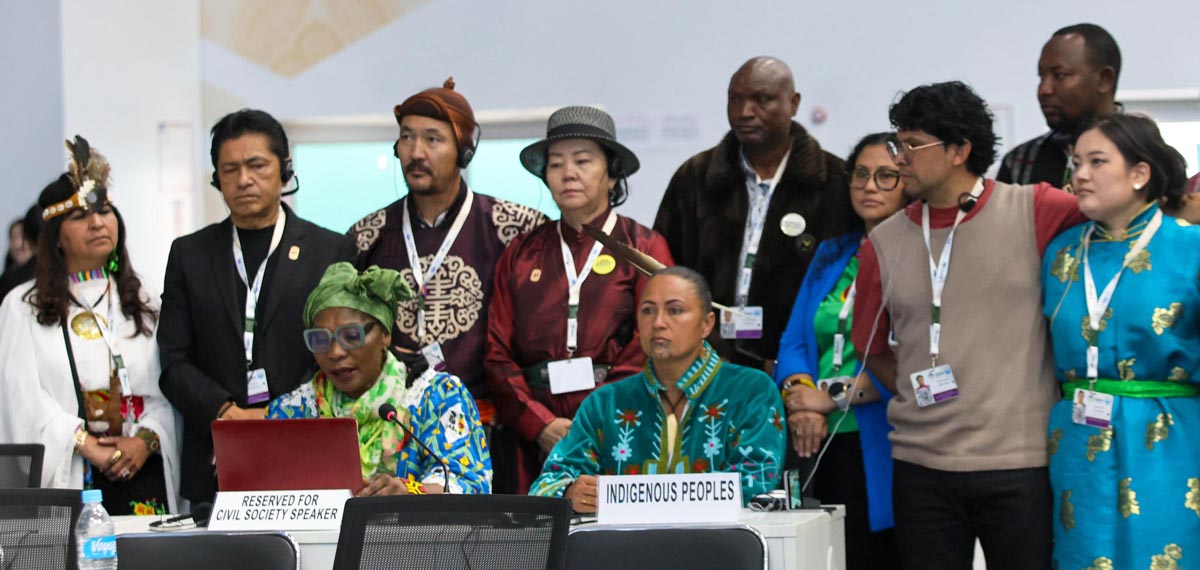
Outside of the main plenary hall, Indigenous Peoples and local communities converged during COP17 to move forward on the substance of their discussions in Riyadh two years previous. At COP16 Decision 5/COP.16 initiated the process of developing two separate caucuses, one for Indigenous Peoples and one for Local Communities. Consultations continued ahead of COP17, where the process was expected to move further into implementation. However, at the opening plenary, agenda item 8(a) on civil society participation, covering the caucus process, was deferred. Despite this, Indigenous Peoples and local communities continued meeting and organising throughout the COP.
During COP17 local community representatives and organisations working with them collaborated to establish a Caucus for Local Communities. The model proposed by the Global Forum of Local Communities on Climate Change (GFLCCC) provided a starting point for the Caucus’s governance structure, which was further developed through collective discussions. These discussions addressed the Caucus’s purpose, self-identification and community validation, representation, engagement, and decision-making. The Caucus adopted an “8+5” model, with eight regional seats in dialogue with five Party representatives. On 26 August 2026, participating organisations and representatives self-constituted the Caucus and adopted its Constitutive Declaration. This Declaration, together with the Ulaanbaatar Call to Action and a Technical Note on strengthening civil society participation procedures, was submitted to the Secretariat as a contribution to the ongoing process for establishing and strengthening the Caucus, including the Terms of Reference under negotiation.
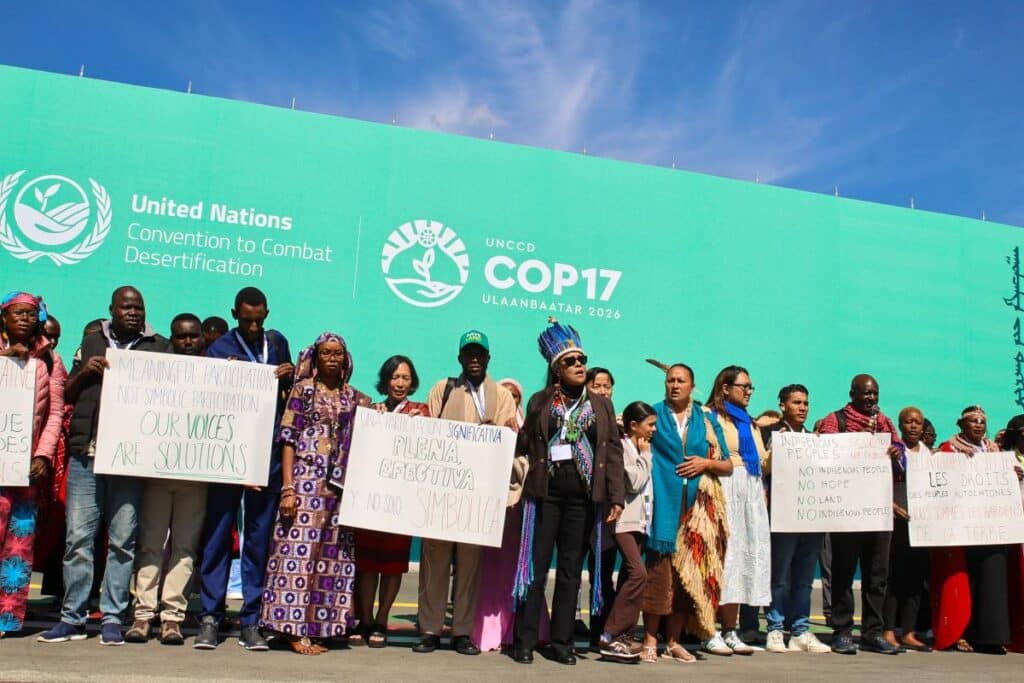
Dedicated spaces for Indigenous Peoples and local communities can support their meaningful participation in UNCCD processes by bringing their voices, priorities and knowledge into discussions and decisions. This is especially relevant because these communities are rights-holders who live in, depend on and manage territories affected by land degradation, desertification and drought, while also facing biodiversity loss and climate change. Their Indigenous and traditional knowledge, local practices and governance systems can contribute to conservation, sustainable land management, drought resilience and the achievement of Land Degradation Neutrality (LDN). At the same time, these spaces should remain closely connected to the broader civil society space under the UNCCD, so that stronger representation of different constituencies strengthens collective civil society engagement.
International frameworks for Indigenous Peoples are more established. For local communities, international processes and institutions are developing principles and criteria for recognition and participation. These efforts must converge at the global level, so that a shared and inclusive set of principles and criteria can emerge across institutions and conventions. These principles should reflect the diversity of local communities and avoid excluding groups through narrow criteria, while ensuring consistency and preventing contradictory approaches to recognition, participation, representation, programmes and access to funding. Clear definition of “local communities”, including whether the definition should refer primarily to producers and natural resource users, or more broadly to territorially rooted actors, including those involved in local food systems in other ways.
Finally, stronger synergy among the three Rio Conventions is particularly important for Local Communities and Indigenous Peoples, because in their territories they face the interconnected realities that all three conventions seek to address: land degradation, biodiversity loss and climate change. At the same time, other international frameworks are also directly relevant to their rights, knowledge and practices. These include Article 9 of the International Treaty on Plant Genetic Resources for Food and Agriculture on Farmers’ Rights and the Global Plan of Action for Animal Genetic Resources. These frameworks should therefore also be connected to the broader discussion on recognition, participation and coordination.
For Drynet, the emergence of these caucuses is an important step towards ensuring that the communities closest to the land are better represented and included in decisions that affect them.