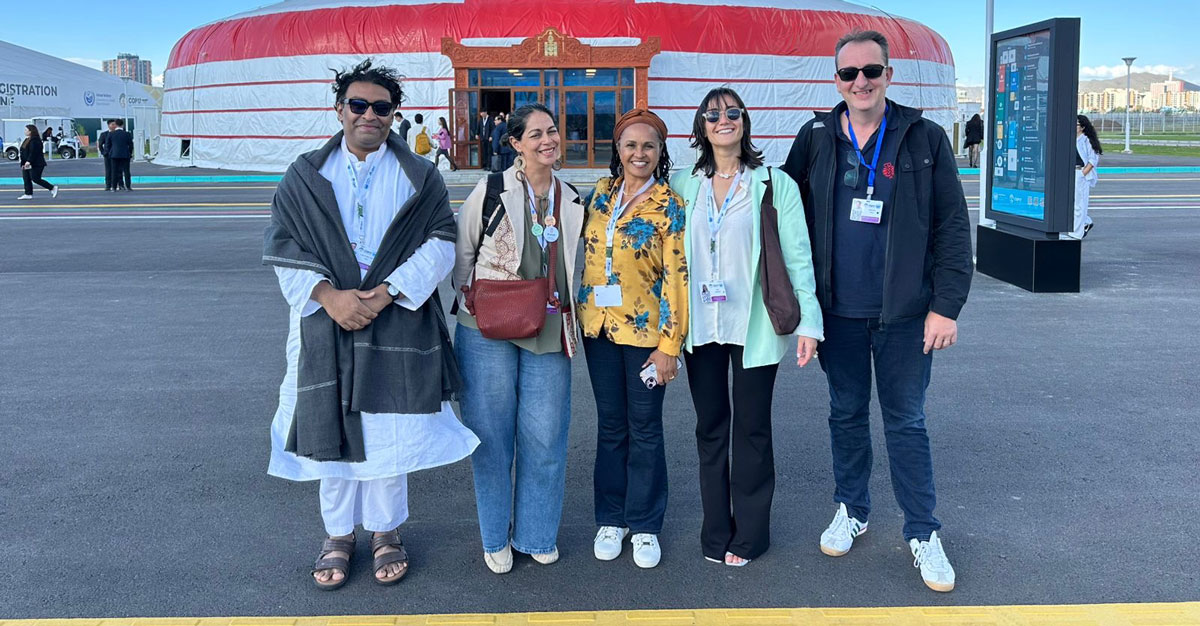
We are delighted to introduce the seven mentees of the second cohort of the CS4LDN mentorship programme – emerging leaders from Africa, Latin America and Asia who joined the programme earlier this year. Here they share what the mentorship means to them, what Land Degradation Neutrality (LDN) looks like in their local contexts, their vision for the future, and the challenges they face in advancing sustainable land management on the ground.
The CS4LDN mentorship programme strengthens civil society’s voice in global land governance by connecting experienced advocates with emerging leaders. This knowledge transfer equips a new generation of advocates with the skills and networks needed to engage effectively in international discussions on land degradation and desertification.
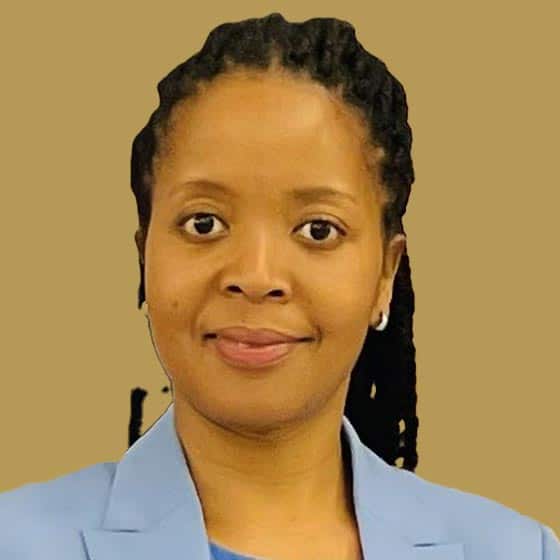
Fiona Tinarwo
Coordinator, Organic Farming Academy | Zimbabwe
Fiona leads programmes promoting organic and regenerative agriculture, climate resilience and sustainable livelihoods among smallholder farmers and communities.
Mentorship: This is an opportunity to deepen my understanding of the UNCCD and LDN, strengthen my policy advocacy and leadership skills, and connect with other leaders and best practices on national and global land restoration processes.
Vision for LDN: LDN means ensuring productive land is restored, protected and sustainably managed whilst creating lasting benefits for ecosystems and the communities that depend on it for their livelihoods.
Key Challenge: Limited financing to address land degradation and insufficient integration of community knowledge, evidence and priorities into land restoration policies.

Abdoul-Azize Boukary
Vice President, Land and Health Association (LHA) | Benin
Abdoul-Azize leads LHA’s annual work programme, promoting healthy land, community resilience, biodiversity conservation, and inclusive environmental action, while representing the organisation in national and international spaces.
Mentorship: It has equipped me with practical knowledge, confidence, and a valuable network to engage more effectively in UNCCD processes. It has strengthened my ability to link local realities in Benin with global advocacy for land restoration.
Vision for LDN: LDN means restoring and managing land in a way that leaves no one behind, regardless of gender. It requires balancing land use, restoration, food security, and respect for the rights and knowledge of local communities.
Key Challenge: Limited access to finance, weak participation of local communities in decision-making, and insecure land tenure. Better local data and stronger support for community-led restoration initiatives are also essential.

Atta ul Haq
Strategic & Technical Lead Adviser, Youth Association for Development (YAD) | Pakistan
Atta provides strategic and technical guidance on community-based development, climate resilience, sustainable land and water management, and environmental initiatives in the Balochistan province.
Mentorship: This is an opportunity to connect community-level experience from Balochistan with global UNCCD policy processes, while strengthening my capacity for evidence-based advocacy, LDN implementation, and meaningful civil society engagement.
Vision for LDN: My vision is to make land restoration a community-led process that combines local and Indigenous knowledge with science, enabling dryland communities in Balochistan to restore degraded land, strengthen livelihoods, and build resilience to drought and climate change.
Key Challenges: Increasing water scarcity and drought, land degradation, limited resources for restoration, weak coordination among stakeholders, and insufficient integration of local and Indigenous knowledge into land-management policies and programmes.
Pía leads urban renaturalisation and ecosystem restoration initiatives, connecting communities, public institutions, and private actors to integrate biodiversity into cities.
Mentorship: She sees the mentorship as an opportunity to strengthen capacities and connect global experiences, translating knowledge from local territories into concrete solutions for land degradation.
Vision for LDN: LDN means not only halting land loss but actively restoring ecosystems by integrating nature into urban and territorial systems.
Key Challenge: Aligning governance, financing, and local action, ensuring that land restoration becomes a real priority in territorial decision-making.

Rebecca Isha Hwaba
Officer in Charge of Gender and Peace, Environmental and Peace Network in Africa (EPENA) | Democratic Republic of Congo
Rebecca supports EPENA’s nexus approach linking environmental protection, peacebuilding, the rights of Indigenous Peoples and population movements.
Mentorship: It has been a valuable learning experience and helped me better understand the challenges related to land degradation and climate change, learn from experts and exchange experiences with other civil society actors working to protect and restore land.
Vision for LDN: LDN means protecting healthy land from degradation while restoring land that has already been lost. My vision is for communities to live in and depend on healthy, productive and resilient ecosystems for generations to come.
Key Challenge: Climate change, poverty, limited resources, unsustainable land use, and insufficient community participation in land governance, especially in fragile and conflict-affected contexts.

Cristal Ange
Executive Director, Fundacion Herencia Ambiental Caribe | Colombia
Cristal leads strategic decision-making for current programmes and future direction, while overseeing partnerships and fundraising to sustain and expand the organisations’ work on biocultural conservation and restoration.
Mentorship: This is an opportunity to connect more deeply with the global network of NGOs working on land degradation and to strengthen my capacity to build alliances, identify opportunities, and bring new knowledge and resources back to my organisation.
Vision for LDN: My vision for LDN is to shift the way society relates to and manages land – from seeing it primarily as a natural resource to recognising it as part of Gaia, the living Earth that sustains us – bringing different perspectives together to transform how we care for and restore it.
Key Challenge: Governance: learning to work together despite different perspectives and reaching consensus on the minimum conditions needed to manage land in ways that sustain food security, ecosystem services, and the rich cultural heritage rooted in people’s relationships with the land.

Nailejileji Asia Tipap
Founder and Executive Director, Indigenous Women Development Affairs (IWDA) | Tanzania
Nailejileji leads programmes on climate justice, land rights, gender equality, Indigenous knowledge and sustainable livelihoods, working with pastoralist and hunter-gatherer communities.
Mentorship: It has strengthened my understanding of international land restoration negotiations and helped me connect community experiences with global policy processes. It has also expanded my networks and strengthened my confidence to advocate for Indigenous women, youth and pastoralist communities.
Vision for LDN: My vision is to restore degraded land while protecting Indigenous Peoples’ land rights, pastoral mobility, livelihoods and ecological knowledge. Restoration should be community-led and recognise Indigenous women and youth as knowledge holders and decision-makers.
Key Challenge: Insecure land tenure, limited community participation, inadequate financing and the weak recognition of Indigenous knowledge. Climate change and top-down conservation approaches also increase pressure on pastoral lands and can undermine locally led restoration.

Tatiana Mijaela Blanco Quiroga
Founder, Mujeres Uru Team | Bolivia
Tatiana works with local communities and Indigenous Peoples to restore degraded shoreline using native plants, ancestral knowledge and Indigenous and nature-based solutions.
Mentorship: This gives me a space to learn from experienced mentors and to carry the voice of Indigenous and community-led organisations into global land restoration discussions. I believe that educating and supporting women means to raise a village, thus achieving the “Suma Qamaña” (the living well for all). This mentorship is helping us achieve this goal.
Vision for LDN: My vision is a world where Indigenous knowledge is recognised and funded as a core restoration solution, and where women, youth, Indigenous Peoples and local communities are the owners and stewards of the land they restore. For me, LDN is Ayni, reciprocity, an ancient Queachan principle of mutual care: what we take from the Earth, we must give back.
Key Challenge: Finance rarely reaches the ground. Grassroots, Indigenous-led initiatives run on small grants and volunteer hours, while the extractive activities degrading land and wetlands operate on a completely different financial scale.