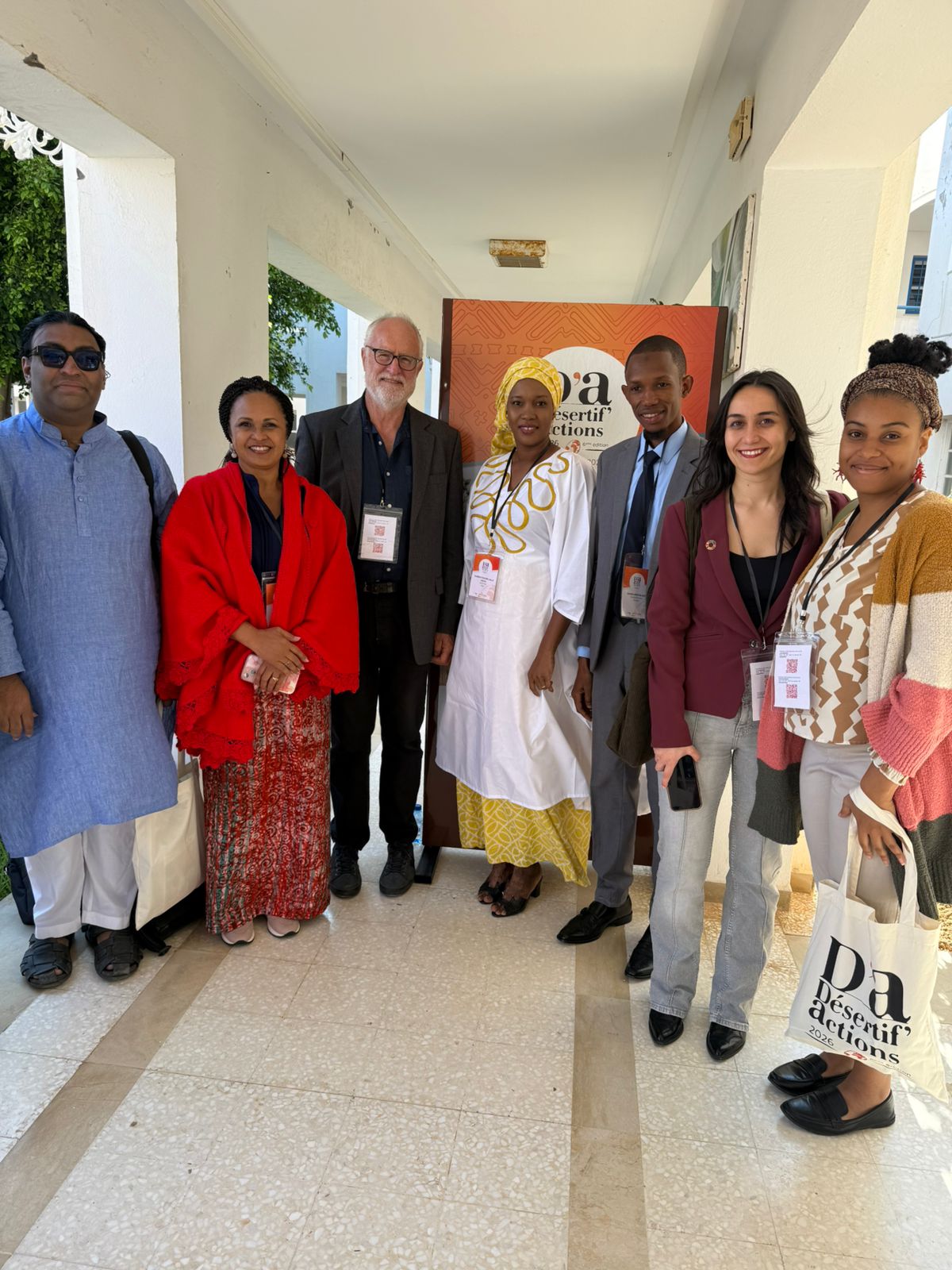
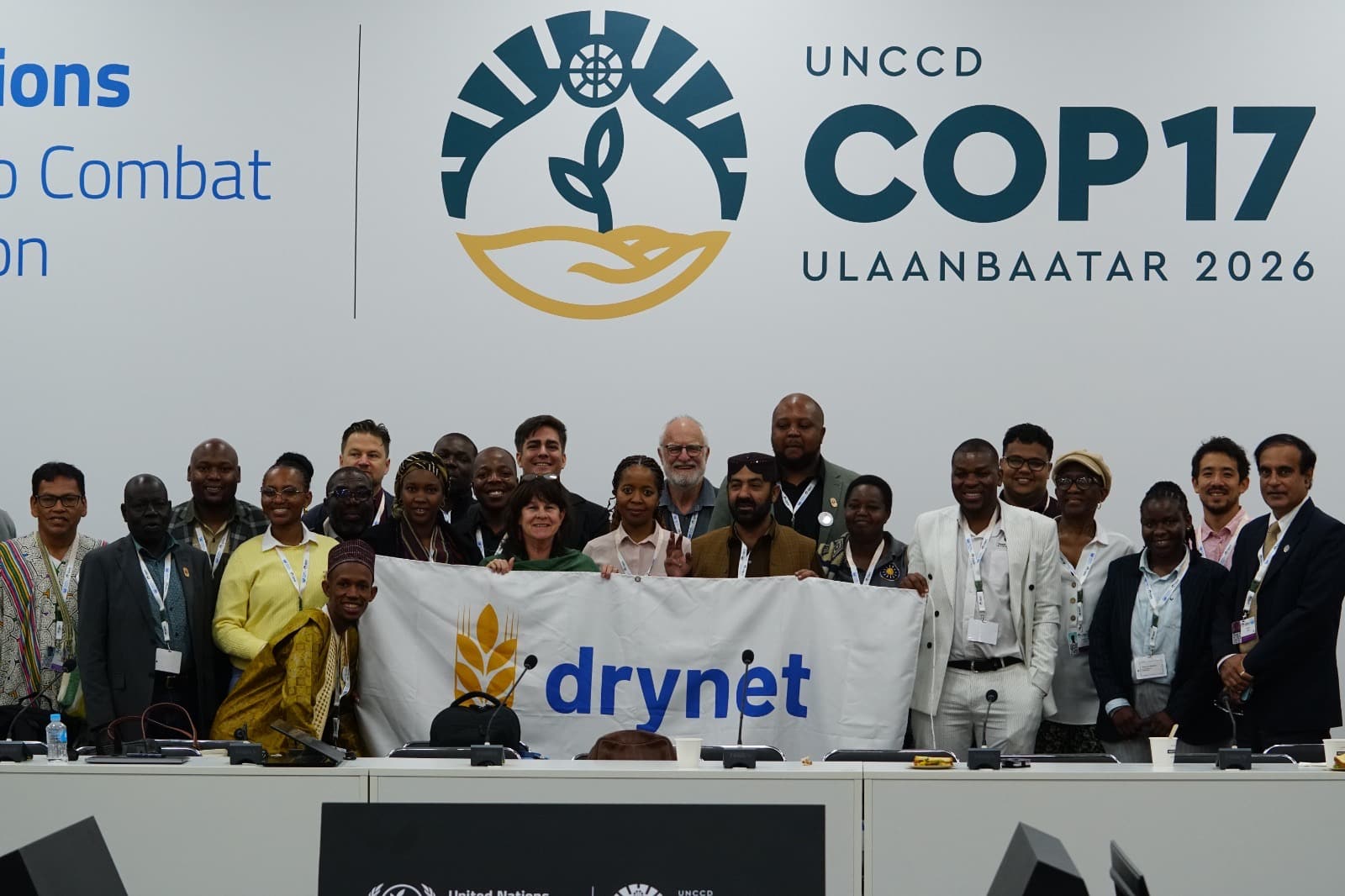
The Desertif’Actions Summit is an international multi-stakeholder platform organised by the French NGO CARI since 2006. It is designed to bring together civil society, researchers, public institutions, and local actors working on land degradation, desertification, and drought. Its core purpose is to foster dialogue, share knowledge, and co-construct advocacy messages that can influence global policy processes, particularly within the framework of the UNCCD.
The 2026 edition, held from March 25–28 in Djerba, Tunisia, focused on strengthening the resilience of territories in the face of increasing drought and climate-related crises. Bringing together nearly 400 international participants, the Summit aimed to raise awareness of accelerating land degradation, share practical solutions, and co-develop policy recommendations to inform discussions leading up to COP17.
Within this broader framework, on March 26, Drynet and IUCN hosted a side event highlighting the critical role of civil society in addressing desertification and advancing Land Degradation Neutrality (LDN). This energised event gave rise to stimulating discussions and valuable insights.
Under the title “Capacities for Impact: Strengthening Meaningful Civil Society Participation in LDN Processes,” the session emphasised that effective participation requires not only technical capacities, but also equitable access to funding.
Four mentees from the Drynet Mentorship Programme shared their practical experiences from the field, pointing to persistent barriers—particularly limited financing and structural constraints—that often prevent local actors from turning participation into tangible impact.
The session also presented key insights on overcoming barriers and creating enabling conditions for inclusive and effective access to funding, while underscoring the contribution of agroecology as a territorial approach to advancing LDN—through soil restoration, biodiversity conservation, and the strengthening of climate resilience in local production systems. A new guide to mobilising and scaling up innovative finance to support LDN was launched at the event by Victorine Che Thöner of IUCN.
Through dialogue between participants, mentees, and mentors, the event generated concrete messages to inform advocacy processes in the lead-up to COP17, reinforcing the need to connect local knowledge, capacity development, sustainable production approaches, and financial mechanisms with multilateral lobbying and engagement spaces within the UNCCD processes.
Held during the Summit’s second day—dedicated to improving territorial resilience—the side event complemented broader discussions on water management, biodiversity, agroecology as a key approach to sustainable land use, skills development, and the role of women and youth in building resilient dryland territories.
The inspiring closing comments for the event were delivered by Uxue Urteaga Ruiz de Viñaspre, Youth and Partnerships Analyst of the GEF.