By Maedeh Salimi, CENESTA
The International Conference on Agrarian Reform and Rural Development (ICARRD+20), held in February 2026 in Cartagena, Colombia, provided an important opportunity to revisit global commitments to equitable land governance and rural development. Bringing together governments, civil society organisations, researchers, and international actors, the conference created a space to reflect on two decades of progress while confronting persistent and emerging challenges. These challenges also point to the continued relevance of agrarian reform in addressing structural inequalities in access to land and resources.

These discussions took place in a context marked by deepening land inequality, accelerating climate change, increasing pressure on natural resources, and growing conflicts. In this setting, a key point of reflection was the need to move beyond narrow understandings of land access as formal ownership and to engage more seriously with the concept of “territory.” Territory is not merely a physical or administrative space, but a dynamic arena of social, ecological, cultural, and economic relations where livelihoods, identities, and knowledge systems are shaped. From this perspective, tenure security can only be meaningful if these interconnected dimensions are recognised. This includes the growing recognition of agroecological approaches as pathways to resilient agrifood systems.
The final ICARRD+20 declaration reaffirms key priorities, including strengthening tenure security for small scale farmers, Indigenous Peoples, women, and rural communities, as well as addressing land grabbing and structural inequalities. It also highlights the importance of customary and collective tenure systems, along with the role of traditional knowledge in sustaining resilient land use systems.

However, one of the most critical issues raised during the conference was the persistent gap between commitments and implementation. Despite the existence of well-established frameworks such as the Voluntary Guidelines on the Responsible Governance of Tenure (VGGT), their realisation at national and local levels remains uneven and limited. Improving monitoring and data systems is necessary, but not sufficient on its own. This also requires strengthening global observatories and data systems to track progress.
Across civil society, this gap is widely understood not merely as technical but deeply political, linked to power relations and the marginalisation of local actors. Centralised decision making, the limited recognition of Indigenous and traditional knowledge systems, and weak participatory mechanisms continue to constrain meaningful progress in land governance. In this context, strengthening participatory governance and rebalancing power relations are as important as developing technical tools.
The conference also emphasised the interconnected nature of land governance with broader global challenges, including climate justice, biodiversity conservation, and food security. It highlighted the need for stronger alignment between these agendas within international frameworks, particularly through improved policy coherence across land, climate, biodiversity, and food systems. These linkages are closely aligned with ongoing efforts under the UNCCD, as well as related global processes on climate change and biodiversity.

At the same time, concerns were raised regarding the limitations of the final outcomes, particularly the lack of binding mechanisms and insufficient attention to structural issues such as land concentration and unequal control over resources, issues that remain central to ongoing debates on agrarian reform. These critiques point to the need for more transformative approaches beyond existing policy frameworks.
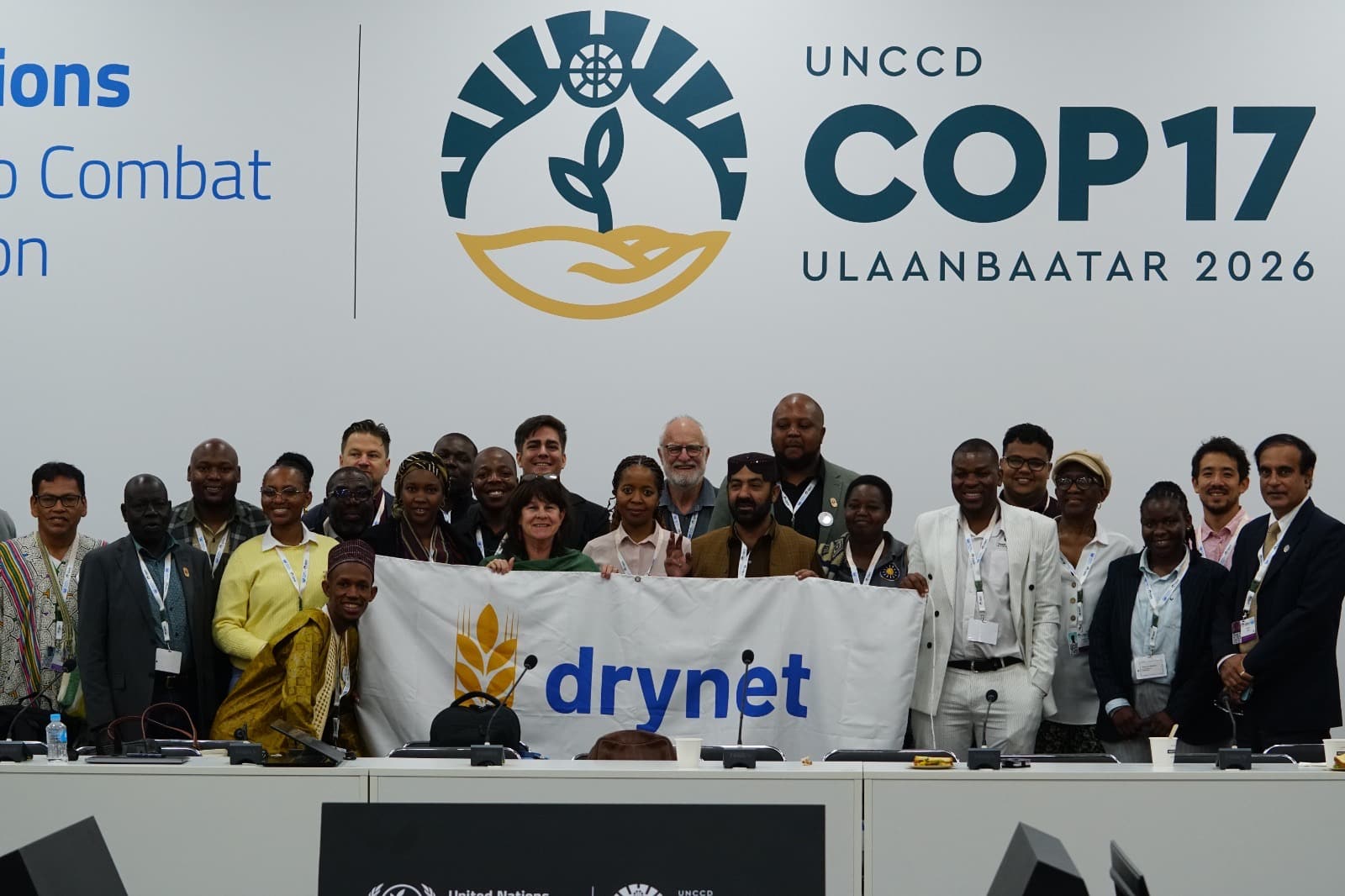
In this context, initiatives that strengthen the engagement of civil society organisations in linking local realities to policy processes become particularly important. Experiences from networks such as Drynet and the Habitat International Coalition (HIC) demonstrate how actors on the ground, including CSOs, Indigenous Peoples and other traditional communities, play a critical role in bridging the persistent gap between commitments and implementation.
These experiences also show that improving land governance is not only about better policies, but about strengthening the capacities of these actors to engage with policy makers, communicate community-based experiences, and ensure that local knowledge and territorial perspectives are reflected in decision making processes. This is essential for ensuring that land governance is not only discussed at global levels, but is shaped by those directly connected to the land. This becomes particularly relevant in contexts where community-based knowledge, agroecological practices, and territorial perspectives remain underrepresented in formal policy spaces.