Message from the Drynet Co-Chairs
Marioldy Sanchez and Fatima Kaba
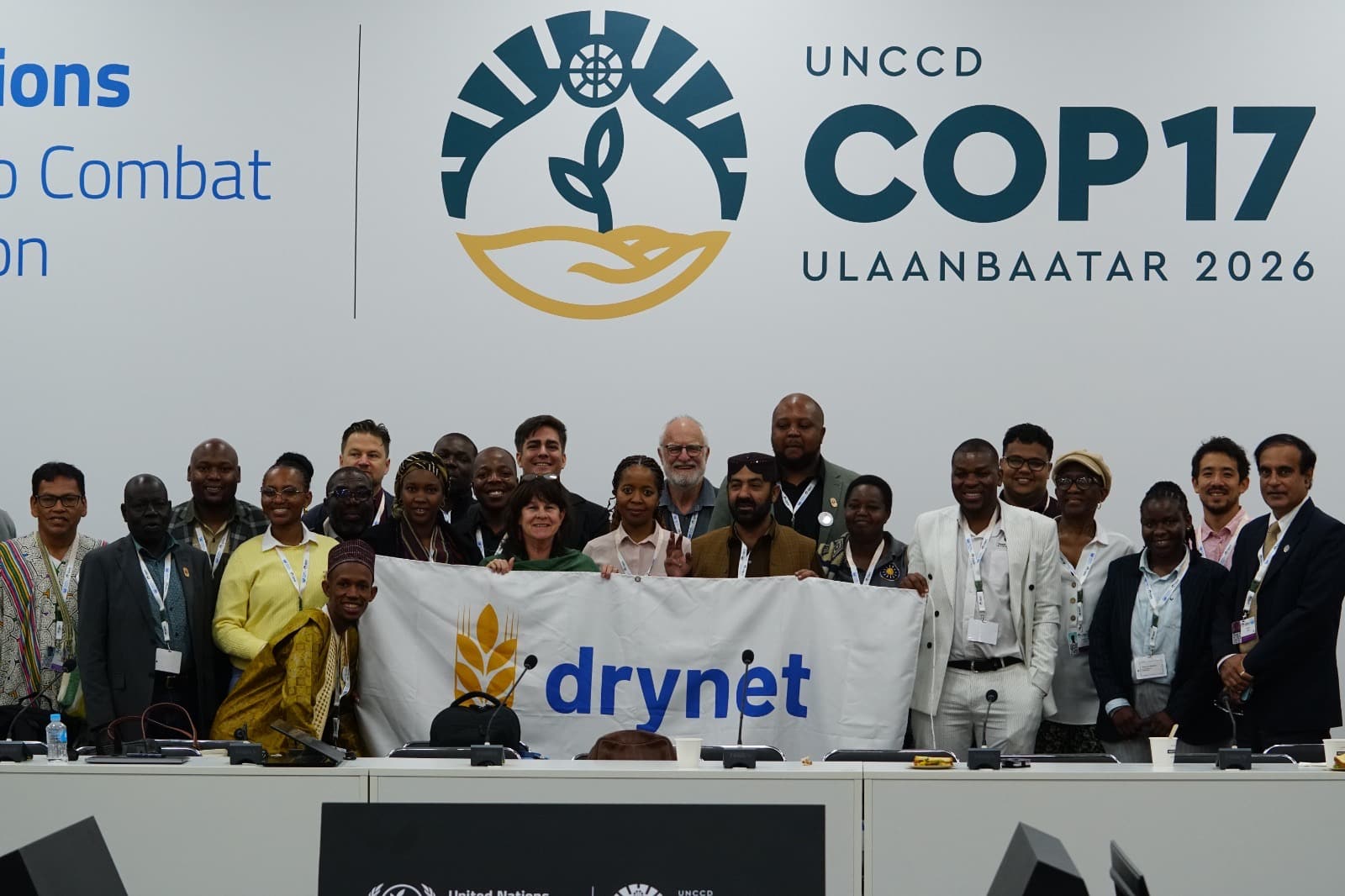
In mid-August, civil society organisations (CSOs) from around the world will come together in Ulaanbataar to join negotiators and other observers for COP17. This is a key milestone in advancing the UNCCD and, above all, for assessing the implementation of its commitments. It will also provide an opportunity to discuss solutions to the urgent challenges of land degradation, desertification and drought.
Our wish for COP17 is that it delivers consensus agreements that trigger concrete implementation at the local level, with equitable and meaningful participation from the communities and organisations on the frontlines of land degradation, desertification and drought.
We call for integrated land management to be more strongly recognised as a key strategy for implementation of the Convention, promoting COP decisions with a landscape approach, strengthening land tenure rights for women, making visible the role of women, supporting agroecological transitions and preventive community-based drought management, and facilitating the dialogue between traditional knowledge and science.
We also hope that the current momentum around rangelands – ecosystems that have been overlooked for many years – helps ensure that the value of all ecosystems, and the vital role of those who conserve and steward them, are fully recognised and meaningfully integrated into land management decisions.
Finally, may the lessons learnt from the initiative of assessing LDN voluntary targets lead to recommendations that facilitate better coordination at regional level, thereby accelerating LDN by 2030 and enhancing the resilience of ecosystems and communities.

A Pivotal Moment for Land, Livelihoods, and Hope
Tanveer Arif from SCOPE, Pakistan
As the first of the three Rio Convention COPs in 2026, UNCCD COP17 in Ulaanbaatar carries the weight of setting the pace for the year’s environmental agenda. Hosted by Mongolia, a nation where 77% of land is degraded and climate-driven dzuds (severe winter disasters) threaten pastoralist livelihoods, the conference theme, “Restoring Land, Restoring Hope,” is a direct call for tangible, ground-level action.
My primary hope is that COP17 will successfully bridge the persistent gap between high-level pledges and implementation on the ground. This requires moving beyond declarations to mobilising the $1 billion per day needed for large-scale restoration. It means shifting from costly drought crisis response to proactive risk management, and finally treating the world’s rangelands that support 500 million pastoralists and 2 billion people living in these regions, as the vital assets they are.
However, significant challenges could derail this ambition. The most critical concern is the chronic underfunding of land restoration initiatives, which remain a fraction of climate finance. Furthermore, a major threat is the ongoing disconnect between policy and practice, where land tenure rights are still treated as peripheral in national strategies. If communities do not have secure rights to the land they restore, projects are likely to fail or even cause harm by displacing Indigenous Peoples and local stewards.
Discussions must prioritise strengthening tenure frameworks, moving past fragmented sectoral approaches to truly integrated land-water-food system governance, and confronting the structural barriers, such as limited capacity within environment ministries, that impede cross-sectoral collaboration. Without these shifts, COP17 risks becoming another talk-shop, leaving the land and its people without the hope the theme promises.
Tanveer has also written more on Pakistan’s stake in COP17 and the land-climate nexus in his LinkedIn article.

Looking to COP17 with Renewed Hope
Marioldy Sanchez from AIDER, Peru
In the lead-up to COP17, AIDER has been actively engaged in a series of key events. From June 17 to 19, we joined regional leaders, experts, and practitioners in Quito for the Latin American Preparatory Meeting on Rangelands, organised by IUCN. Over the course of these days, discussions unfolded around how to align efforts to address land degradation, biodiversity loss, and climate change, while ensuring sustainable productive systems.
Amid this broader regional dialogue, on June 18 we convened a parallel conversation in Lima, Peru. This exchange brought together diverse voices to reflect on locally grounded solutions to combat desertification, highlighting the importance of context-specific actions led by communities and local stakeholders.
Across these spaces, a consistent message emerged: the need of a profound transformation in how land-use planning and management systems are conceived and implemented – one that can effectively reverse the current trajectory of land degradation and pave the way toward more resilient landscapes.
In this context, COP17 offers a key opportunity to move from policy commitments to concrete action on the ground. Recent years have seen important progress through guiding frameworks and growing political will, fostering greater recognition of integrated land management, land tenure, women’s participation, and sustainable food production practices, as essential to maintaining land health and advancing restoration.
We therefore look to COP17 with renewed hope: an opportunity to turn shared priorities into effective, scaled implementation by placing local actors at the very center of this global effort and empowering them to lead the transformations our landscapes urgently need.
Increasing financing for community-based initiatives and landscape-approach programmes, as well as encouraging countries to report more tangible progress on land tenure rights, equitable land governance, and partnerships with civil society, are concrete ways in which this COP can accelerate the changes required to move decisively toward the vitally important goal of land degradation neutrality.
COP17 - Will Agroecology get More Attention?
Maedeh Salimi from CENESTA, Iran
As COP17 takes place during the International Year of Rangelands and Pastoralists, under the theme “Restoring Land. Restoring Hope”, I would like to reflect on agroecology as frame through which to understand and recognise the central role of Indigenous Peoples, local communities, pastoralists, family farmers and small-scale farmers in preventing land degradation and sustaining living landscapes.
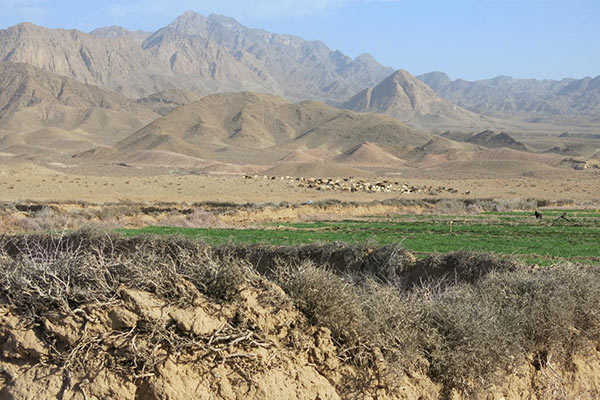
For me, land restoration is not only ecological or technical, but a dynamic process that also includes social, cultural, economic and governance dimensions. Many rangelands, drylands and farming landscapes are living heritage territories, shaped and maintained over generations through local knowledge, Indigenous and local social institutions, collective governance, mobility, water and soil management systems, biodiversity practices and adaptive ways of living with nature.
At COP17 the negotiators will have the opportunity to give greater recognition to agroecology, not only as a set of practices, but as a systemic approach to sustainable land management. Agroecology helps connect ecosystem restoration with food sovereignty, biodiversity conservation, resilient livelihoods, local economies and territorial governance. It also reminds us that restoration must be locally grounded, socially just and ecologically sound, while creating space for innovation alongside traditional knowledge.
At the same time, today’s challenges are becoming more complex. Climate change, drought, water scarcity, biodiversity loss, conflict, displacement and economic pressures are making it increasingly difficult for communities to protect and restore their territories alone. Their knowledge and commitment are essential, but they need practical support through enabling policies, long-term public investment, accessible finance, international cooperation, and institutional recognition of their rights, including collective and customary tenure rights and governance systems.
My hope is that COP17 will help strengthen restoration policies that recognise communities not merely as stakeholders, but as rights holders, knowledge holders and custodians of their territories. Restoring land should also mean restoring dignity, rights, livelihoods, biodiversity, cultural memory and hope for those who have kept these landscapes alive for generations.

In the run-up to COP17, Africa speaks with one voice
Fatima Kaba from ENDA, Senegal and the Pan African Agency of GGW
In June 2026, Cairo hosted the African Negotiators Group preparatory meeting for UNCCD COP17. The session was organised by the African Union Commission in collaboration with Egypt as the host country and international partners including ENDA Energie and UNEP.
Nearly sixty African experts came together to harmonise and strengthen the continent’s positions on desertification, drought, land degradation, land degradation neutrality, access to finance, migration, and sand and dust storms. Drought is of great importance to Africa, as desertification and drought remain a major constraint on socioeconomic development. The group resolved to continue advocating for the adoption of solutions and strategies, including a binding protocol on drought, a decision reached at the African Drylands Week in Windhoek in 2016.
This decision established a strategic framework for drought risk management in Africa, providing guidance on national drought response policies, early warning systems, and impact assessments.
At COP16, however, a binding agreement on drought was not reached. Instead, the Riyadh Political Declaration was adopted and the Riyadh Global Partnership for Drought Resilience launched. This builds on the voluntary “Tafa’ul” initiative established by Saudi Arabia and the UNCCD Secretariat to strengthen dialogue and continue discussions on drought ahead of COP17 in Mongolia. This approach aims to keep the negotiations on track and build trust among states.
Africa’s position remains firm. At the African Ministerial Conference on the Environment (AMCEN) in Abidjan in 2024, support for a legally binding drought protocol was reaffirmed, with South Africa designated as champion on the issue.
The meeting also addressed a critical issue of participation of civil society organisations in contact groups. Recognising the vital role of civil society in achieving Land Degradation Neutrality, negotiators recommended that CSOs support their respective countries, strengthen collaboration with national focal points, and align with agreed national positions, while continuing to raise awareness and share information at the national level.
From the Sahel to SADC, the Great Green Wall goes Continental
A special session dedicated to the Great Green Wall (GGW) Initiative highlighted the progress, lessons learnt, and new prospects of this flagship continental initiative.
The GGW in Southern Africa (SADC) illustrates the gradual expansion of the Sahelian model across the continent. With priorities including access to water, combating drought, ecosystem restoration, and resilient agriculture, this regional initiative focuses on the Zambezi Basin as a priority landscape for climate resilience actions. This confirms that the GGW now extends beyond the Sahel to become a genuine continental initiative and platform for landscape restoration and climate resilience.
In preparation for COP17, negotiators called for the experiences of the GGW and Land Degradation Neutrality to be further integrated into its decisions. Importantly, Africa reaffirmed its determination to be seen as more than just a vulnerable continent: it is a place of collaboration and a genuine global laboratory for innovative solutions to climate change, biodiversity loss and desertification.