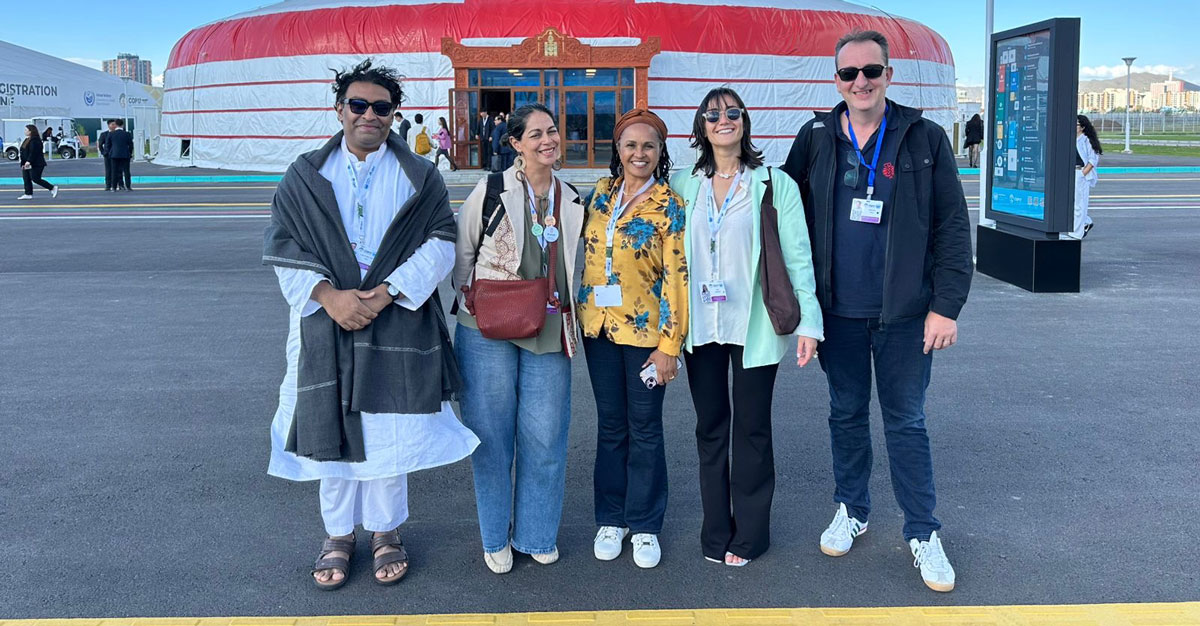
By Abdoul Aziz Sidibe, The Soil Solution (The Gambia)
Before travelling to Mongolia, my main expectation was to understand what participation in a UNCCD COP really means beyond what I had previously experienced through online meetings and discussions. As this was my first COP, I wanted to observe how governments, civil society, and other stakeholders interact, exchange perspectives and contribute to the policy process. I also wanted to better understand how someone working at the community level, particularly on soil health and land restoration in The Gambia, could contribute meaningfully to the global conversation.
One of the most impactful moments of COP17 was the opportunity to deliver a civil society statement during the plenary. Speaking on behalf of civil society in a space where government representatives and international stakeholders were present was both a significant responsibility and an important learning experience. It was particularly meaningful because it built on civil society engagement that I had been part of at Desertif’Actions in Djerba in March 2026.

COP17 pushed me well beyond my usual professional environment. I had to learn quickly how to follow discussions, understand unfamiliar terminology, and navigate a diplomatic policy environment. I became more conscious of the importance of preparation, careful choice of language and understanding the wider context before making an intervention. Most importantly, my perspective changed: I now see local experience from The Gambia not as something separate from global policy discussions, but as valuable evidence and knowledge that can contribute to them.
Beyond the plenary sessions, I had the opportunity to participate as a panellist on community-led restoration and landscape resilience with the Independent Research Institute of Mongolia, and to contribute to discussions on crop diversification and drought resilience at the Turkish Pavilion. These experiences helped me recognise areas for further professional development, particularly in policy advocacy and in connecting field-level experience with international policy processes.

What I value most is that the mentorship did not only prepare me for one COP; it broadened my perspective on what I can contribute and where I can go professionally. It strengthened my confidence, expanded my network and encouraged me to think more seriously about policy advocacy alongside my work on the ground. I left with a new ambition: to eventually become a mentor myself and help create similar spaces and opportunities for others in the future. For me, that is one of the most lasting outcomes of the CS4LDN Mentorship Programme.
As a first-time COP participant, there were moments when the procedures and language felt difficult to follow. However, that discomfort became part of the learning process. Rather than seeing it as a weakness, I learned to ask questions, seek guidance and keep engaging for a meaningful participation.