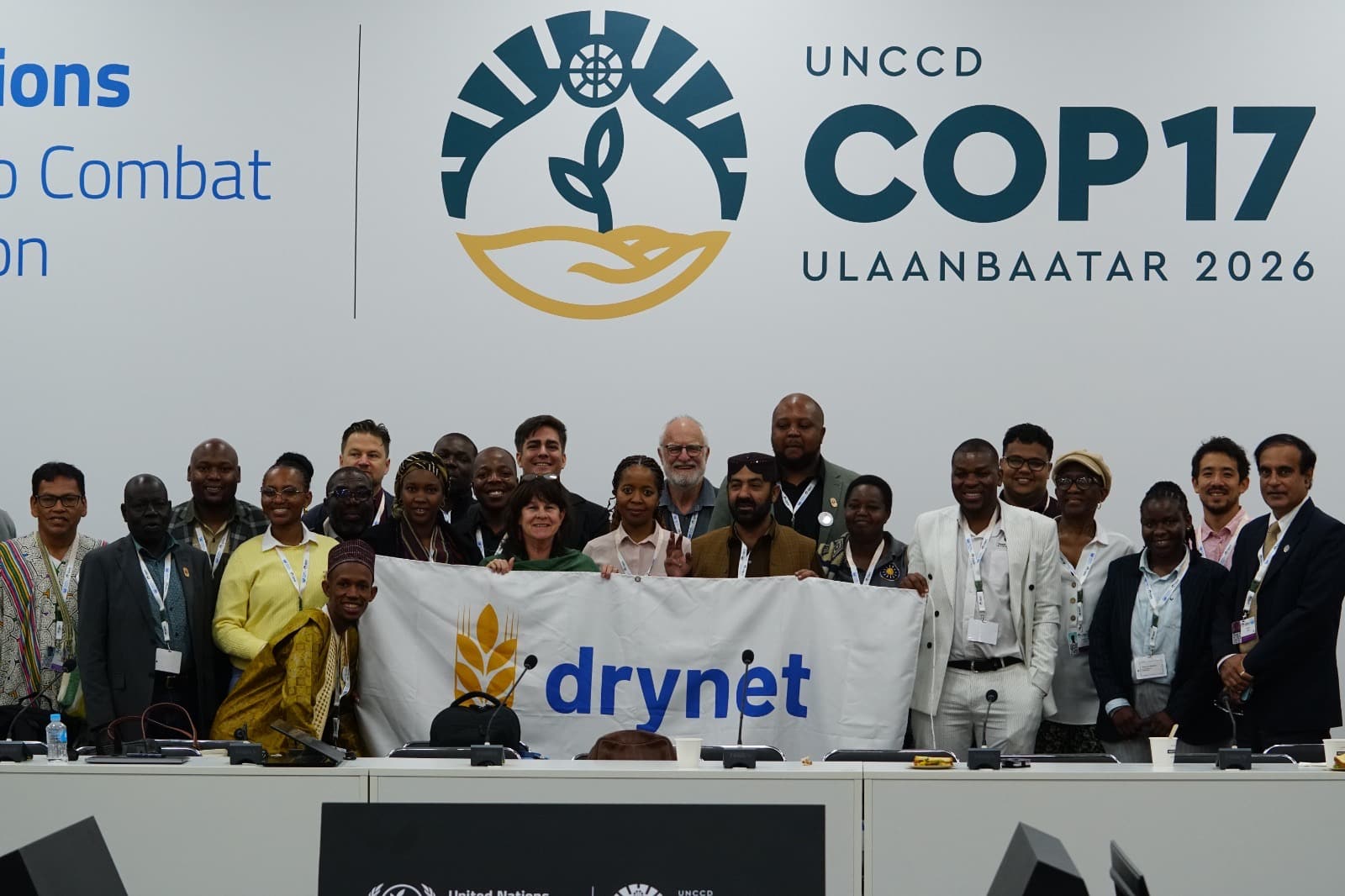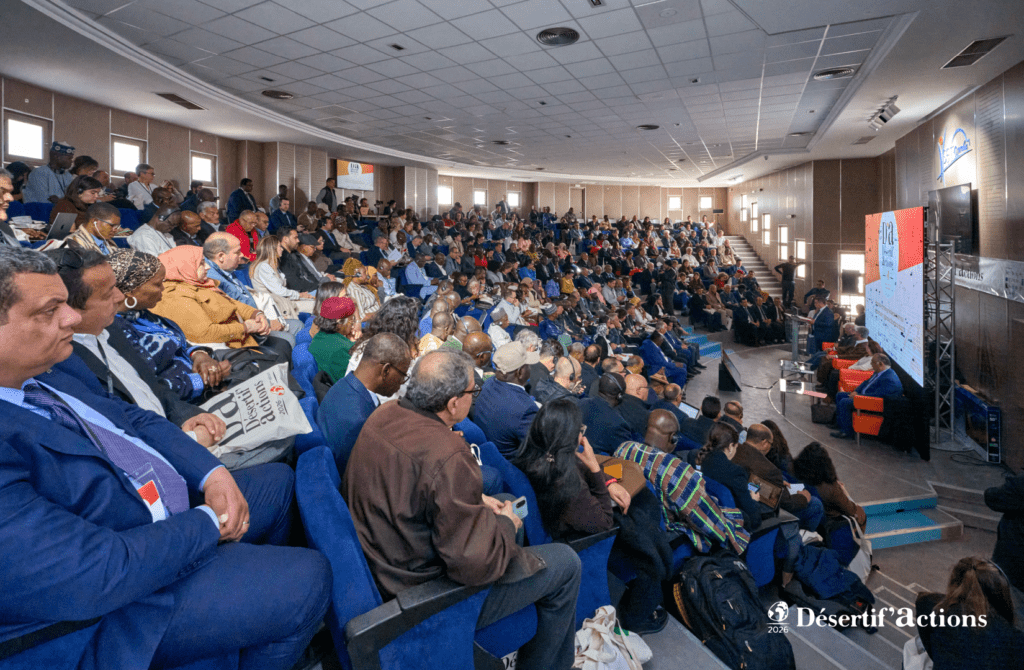
Between 25th and 28th March this year, a remarkable gathering took place on the island of Djerba in Tunisia. Focused on enhancing the resilience of territories to drought, the Désertif’actions Summit brought together nearly 400 participants from more than 50 countries. Claude Gascon, interim director of the Global Environment Facility (GEF), described it as “the world’s largest civil society forum dedicated to desertification, land degradation and drought”.
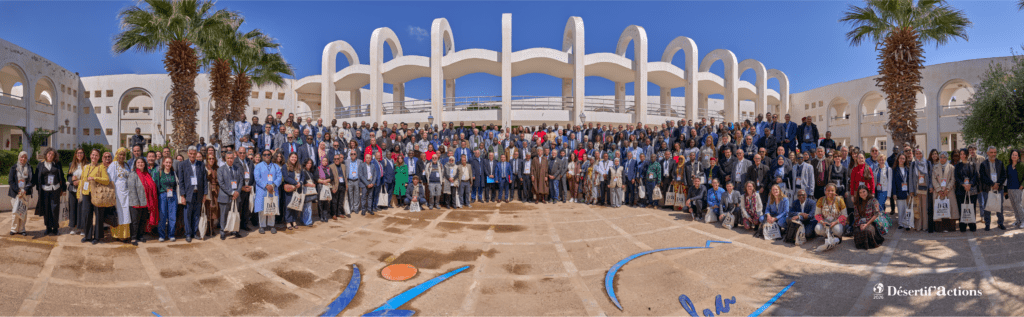
Coordinated by CARI, a Drynet member, the event was co-organised with the Observatory of the Sahara and the Sahel (OSS) and the UNCCD, in partnership with the Citizenship and Sustainable Development Association (ACDD) and WWF North Africa.
Eleven Drynet member organisations participated in the Summit, along with four mentees from sub-Saharan Africa. Support from the GEF enabled wider participation in this wonderful opportunity to learn, connect and prepare together for the upcoming COP17 in Mongolia in August 2026. A side event convened with Drynet’s CS4LDN project partner IUCN shared experiences of the linkages between capacity development, finance and impact on the ground.

Uniquely, the Summit followed an extensive preparatory phase, initiated in 2025. More than 600 people contributed their insights on enhancing drought resilience through workshops led by volunteer CSOs in 18 countries, an online questionnaire, and thematic webinars. The outcomes of this process were presented at the Summit and drought resilience concepts were further developed during thematic group discussions.
Participants formulated recommendations covering the key drivers of territorial resilience across four main dimensions:
- Ecological (agricultural biodiversity, trees and forests),
- Economic (circular economy, employment),
- Technical and scientific (innovative irrigation, resilience measurement),
- Social and institutional (human rights, the role of women and youth, capacity building, multi-stakeholder collaboration).
In anticipation of UNCCD COP17, participants identified four key issues. Parties should:
- Set out a robust framework for the post-2030 strategy to combat desertification, land degradation and drought at the global level
- Elaborate and adopt clear guidelines to strengthen policies and support for pastoralism
- Consider practical and feasible ways of accelerating LDN on agricultural land
- And finally, reach a consensus on accelerating drought resilience

Delegates from governments, donor agencies and multilateral institutions also contributed to the Summit’s discussions. According to Ms Philippine Dutailly, UNCCD Focal Point for France: “CSOs have a vital role to play in bringing the recommendations of Désertif’actions 2026 to COP17 and contributing to the success of the UNCCD negotiations”.
Tasked with coordinating civil society advocacy during COP17, the UNCCD CSO Panel used the pre-Summit global consultation on drought resilience to identify potential themes for the Open Session Dialogues. The Summit emphasised the need to shift from reactive to proactive drought action across all sectors, including infrastructure, water, pastoralism, agriculture, manufacturing, governance and finance. The key messages drawn from the various phases of Désertif’actions will inform the joint CSO statements at COP17.
Désertif’actions showed that despite a global context marked by wars and the decline of multilateralism, it is possible to bring together diverse people from different cultures, languages and geographical contexts to discuss shared challenges and collectively build a strong and powerful voice to improve governance of land-based resources to support communities in all parts of the world.