By Victorine Che Thöner, IUCN
In my youth, I loved the animated series, The Bear, the Tiger and the Others. The characters lived in a small, cozy house by a river and often set out for places like Panama. It was so beautiful that Panama became the land of my dreams. Being in Panama for CRIC 23 made that dream come true and I took that feeling with me into the UNCCD conference rooms.
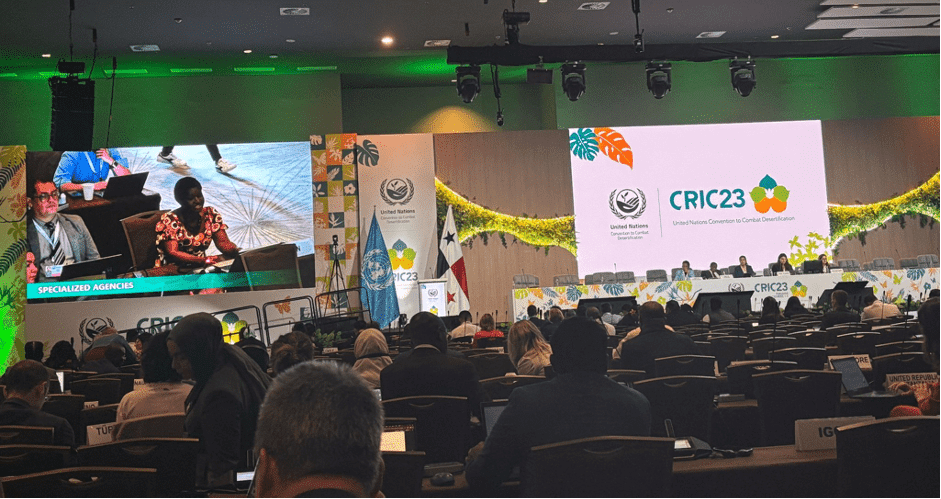
It was my first time in the UNCCD process, and it felt different the moment I walked in. Compared to CBD and UNFCCC COPs, CRIC 23 was smaller, more focused, more human. I was so energised I danced into the conference room; someone caught that moment on camera. That energy never dipped.

I came to CRIC as myself—and as part of the IUCN delegation. I wanted to learn, share what I know, build partnerships, deliver our project milestones, and stand with people working to restore land and futures. Wearing the IUCN badge shaped how I moved: listen first, speak in clear words, invite CSOs and other non-state actors, Indigenous Peoples as well as local communities, youth and governments to sit as partners, and leave every exchange with a next step. That blend, my own curiosity and IUCN’s values of science, inclusion and service made the week feel purposeful: fewer grand gestures, more steady actions that carry practice into policy and policy back to the ground.
During the week at CRIC, I moved through the Convention Centre listening and speaking in equal measure: moderating a side event, joining panels of other side events, and working with the UNCCD CSO Panel and the wider civil-society family, including Indigenous Peoples and local community organisations to craft statements tied to agenda items and deliver them on the floor. I met Party representatives, compared notes in hallways, and helped turn shared concerns into clear, respectful interventions that kept people – farmers, pastoralists, youth, and communities at the centre. A highlight was reading IUCN’s statement in the Sand and Dust Storms (SDS) session in the conference room. It felt like a quiet purpose fulfilled, and a beginning: a commitment to help move this work forward, linking what people live on the ground to what gets decided in the room and back to the ground again.
I felt gratitude moderating the side event on Agroecology as a Pathway for Dryland Restoration, for the panellists, and for a room packed with youth, producers, Party representatives, CSOs, and Indigenous Peoples & local community organisations. The interest was huge because agroecology is simple and human: soils that hold, water that lasts, food on the table, shade trees for children and rangelands that stay open and productive, with pastoralists able to move, find fodder, and keep their herds and culture alive. It is people caring for land and land answering back.
The CRIC arena was also a milestone for the Strengthening Civil Society Role in Achieving Land Degradation Neutrality (CS4LDN) project. This is a GEF-funded initiative implemented by IUCN with Drynet and Both ENDS to build the capacity and recognition of CSOs worldwide to influence and implement LDN policies and investments. At CRIC, we brought partners together, launched the mentorship programme, giving mentees their first run engaging in the process and influencing the policy fora, coordinated statements with the CSO Panel, raised the project’s profile, and set concrete follow-ups so CSO voices and access to finance move from hallways to country action.

UNCCD’s priority is clear: prevent and reverse land degradation, reach Land Degradation Neutrality (LDN), and build drought resilience. CRIC23 stuck to this priority by taking stock of PRAIS reporting and data quality, discussing resource mobilisation and elevating SDS and land tenure, gender sensitivity, as cross-cutting enablers, with an interim look toward the post-2030 strategy. Less ceremony, more delivery.
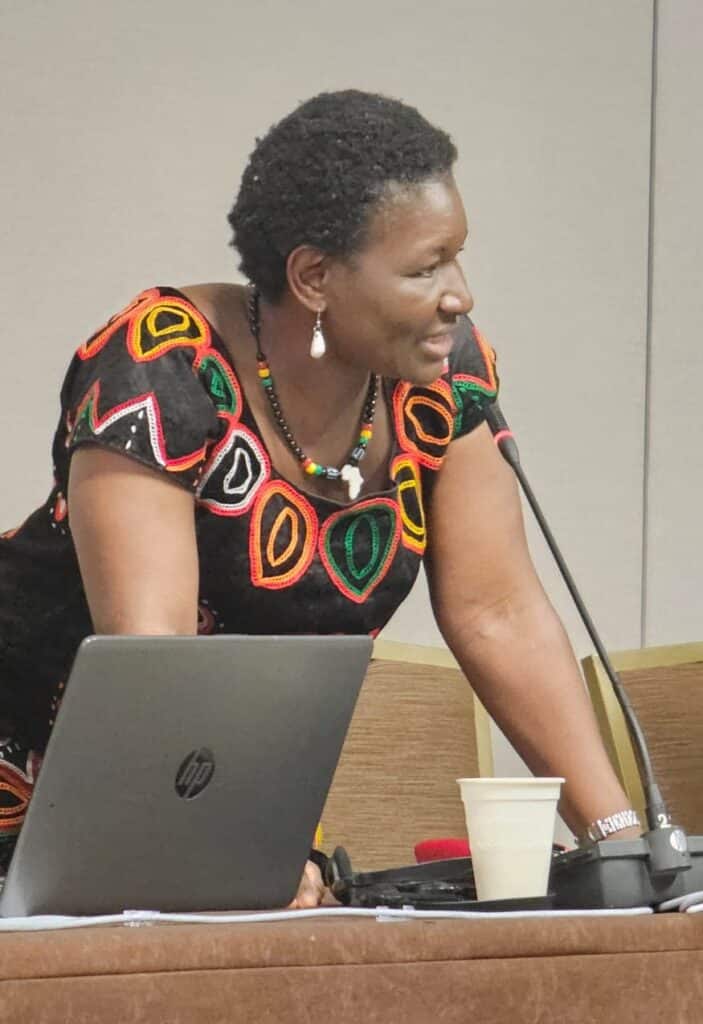
their ways into conference rooms and back to the ground again
My key takeaways from CRIC23: Inclusion worked, the microphone moved and CSOs, specialised agencies, Indigenous Peoples & local communities and youth shaped the conversation. Evidence served decisions, with PRAIS debates converging on fewer, clearer indicators countries can use. Risks and rights were at the centre – drought/SDS, land tenure, gender and youth treated as delivery enablers, not footnotes. Most importantly, there was follow-through: finance talks shifted toward real access pathways, with owners and timelines to carry outcomes beyond the gavel.
CRIC23 reminded me why this space matters. It is closer to the ground. It’s where LDN stops being an abstract target and starts looking like a water trench, a pasture that holds through the dry season, a women’s cooperative with a signed order from a buyer – quantity, price, and delivery date agreed, so income is assured, a producer organisation trusted to report change and the steady leadership of non-state actors pulling delivery forward. I left Panama tired in the best way, grateful that a childhood dream met real work, and clear on what to do next.