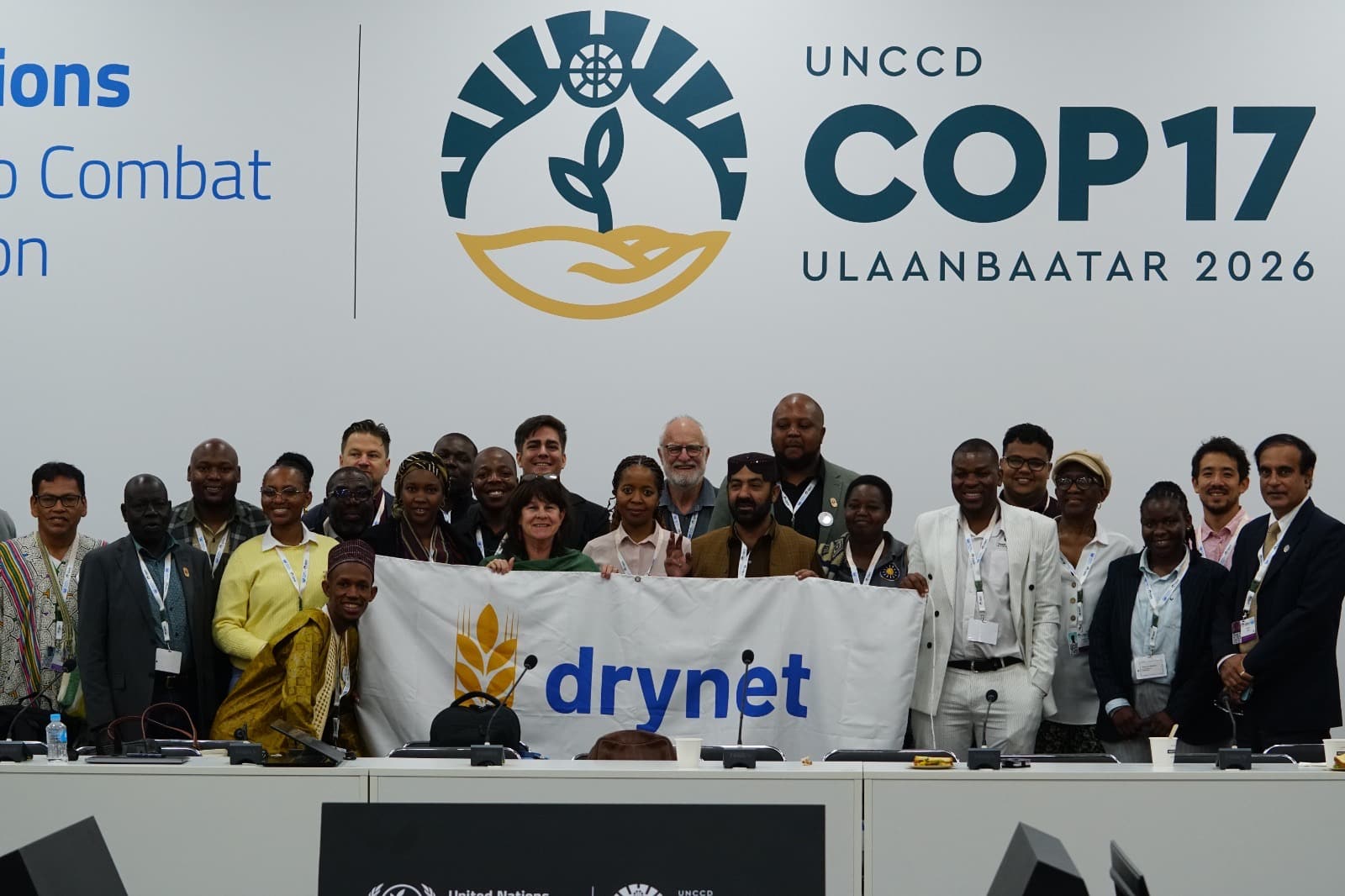
This article was contributed by Drynet member SPONG in Burkina Faso.
SPONG is an umbrella organisation that supports the work of its members in Burkina Faso to ensure food security and improve the livelihoods of local communities. Land restoration is a vital part of sustainable rural development.

From organising community work to effective land restoration, capacity building, logistical support and local advocacy, SPONG and its members are making a real difference to the lives of rural communities. In the northern region where member APEDR operates, restoration is led by village committees. Producers are organised into community working groups, promoting mutual aid, collective planning and local accountability. Traditional and communal authorities ensure secure access to land. Land restoration techniques such as zaï, half-moons and stone cordons are promoted, combining endogenous knowledge with agroecological innovation.
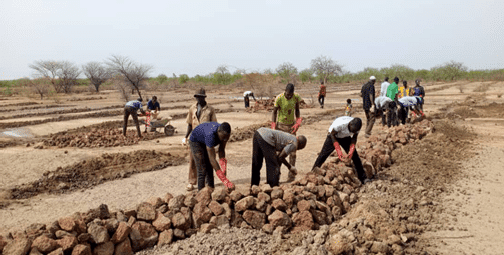
These successes are based on Farmer-Managed Natural Regeneration (FMNR), a low-cost, sustainable land restoration technique where farmers systematically regenerate and manage trees and shrubs from living, dormant root systems or wild seeds. It involves thinning and pruning to foster growth, transforming degraded land into productive, agroforestry systems. This community-led initiative in the north has enabled the recovery of more than 12,000 hectares of degraded land. On these recovered areas, which were previously unusable, cereal crops, fodder and vegetables are now being produced by the communities.

Overall, the combined action of these initiatives led by SPONG has restored more than 80,000 hectares of land, at an estimated cost of €50 per hectare.